This is the second documentary released by CCTV about the Chinese men’s table tennis team’s journey to defend its 12th consecutive World Team Championships title in London. Go behind the scenes as Wang Chuqin, Liang Jingkun, Lin Shidong, Wang Hao, and Team China navigate pressure, setbacks, and the challenge of defending the sport’s most dominant legacy.
Ahead of the 2026 World Team Championships in London, Chinese Central Television released a short documentary following China’s men’s team during its closed-door training camp, featuring exclusive interviews with Wang Chuqin, Lin Shidong, Zhou Qihao, Xiang Peng, Liang Jingkun, and head coach Wang Hao.
(Thanks to Mira for helping with the basic translation of the first draft.)
I’m starting to go back through Wang Chuqin’s table tennis career, focusing on key moments and milestones. His story is still unfolding, and there’s a lot more ahead. But as he once said:
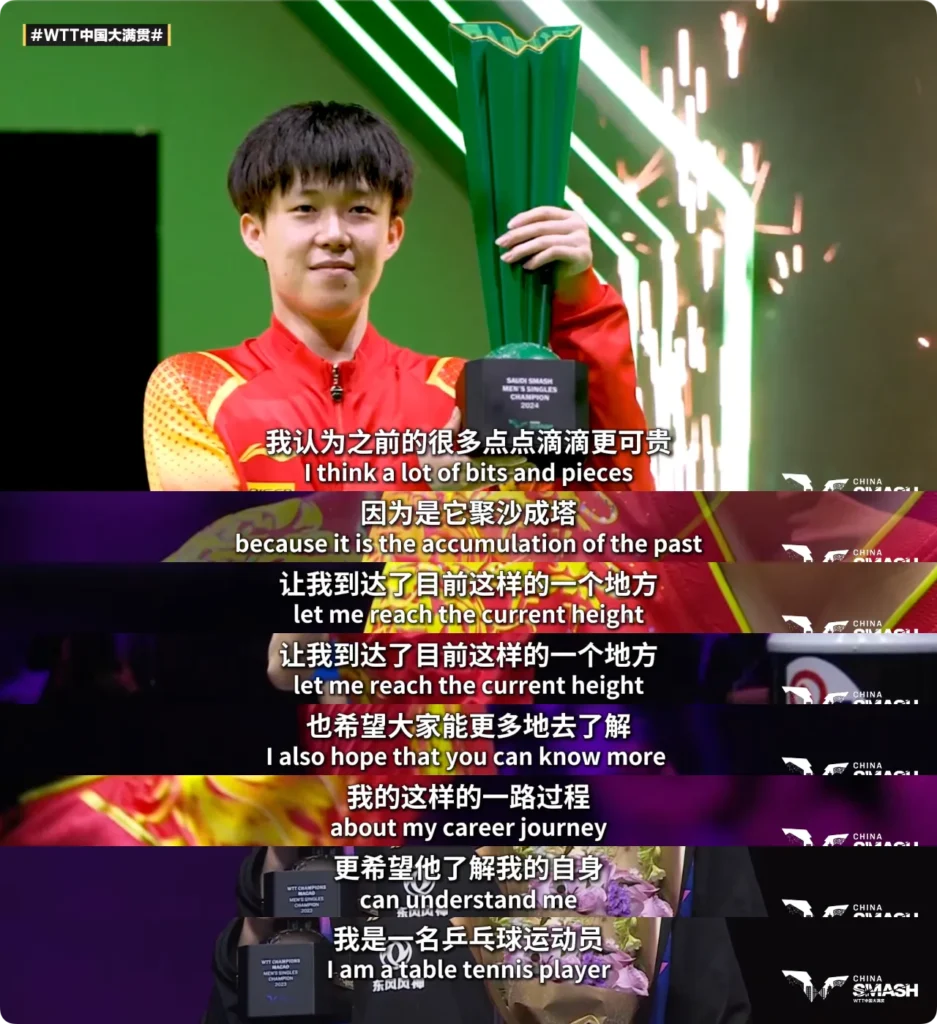
“I think a lot of bits and pieces in the past are more meaningful, because they’re what allowed me to reach where I am today. I also hope you can get to know my journey better and understand me. I’m a table tennis player.”1
That idea stuck with me. I can’t wait to go back and take a closer look at those “bits and pieces.”
In this series, I’ll step away from a strict timeline and jump between moments whenever something catches my attention. It won’t be posted regularly. Spring break just finished 🙁 and I’m heading to London. 😁
Today, I’m going to talk about 2022, specifically the World Team Table Tennis Championships in Chengdu. It was one of the most important milestones in Wang’s career and one of the most intense tournaments the Chinese national team had faced in years. Even now, looking back, it still feels breathtaking.
Some tournaments are remembered because of who won them. Others are remembered because they changed what came next.
For Team China, the 2022 World Team Championships in Chengdu was one such tournament. For Wang Chuqin, it became the moment that set the course of his career.
To understand how he got there, we have to go back to 2022. Not just the matches, but the system, the internal competition, and the uncertainty surrounding Team China.
For a long time, table tennis has been treated as a light sport. Fast, technical, elegant, and precise, but physically modest when set beside strength or endurance disciplines. One player who is challenging these perceptions is wang chuqin, whose athletic ability and powerful style have made many rethink the sport’s demands.
However, the modern game operates under conditions fundamentally different from those that shaped earlier generations. Dense competition calendars, frequent intercontinental travel, ranking-driven pressure, and multi-event participation stack into the sustained load. That produces structural fatigue, a gradual erosion of precision, clarity, and resilience under continuous demand.
Wang Chuqin stands at the center of this reality.
His run through China Smash and WTT Finals made the hidden cost difficult to ignore. He dragged himself from event to event, from match to match, clearly running on empty, both physically and mentally. The performances were widely praised for resilience and willpower, but what lay beneath?
Whether the overload came from team expectations or from Wang’s own drive matters far less than how completely it was normalized. Strain was framed as honor, obscuring deeper structural problems not only within the Chinese system, but across modern table tennis as an industry that has failed to keep pace with its own demands.
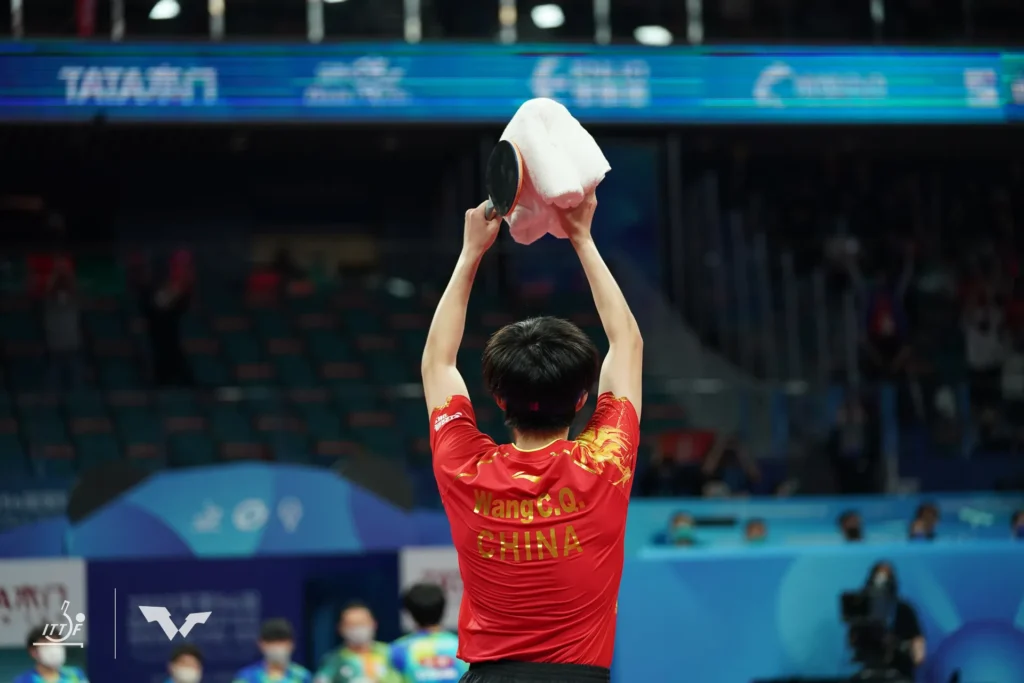
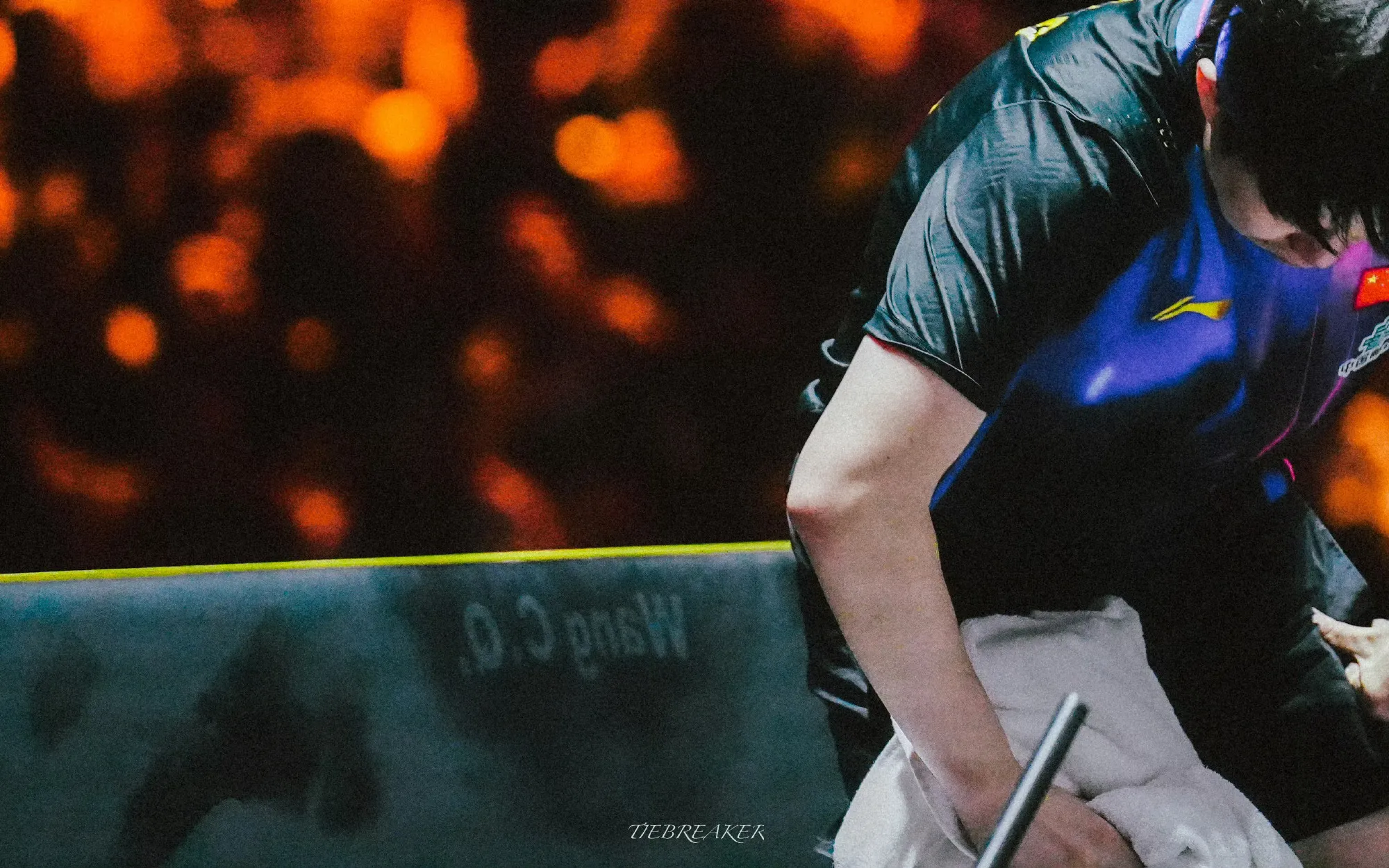
Wang’s sweat-soaked courtside couch, all that was left. Men’s singles semifinal, China Smash 2025.
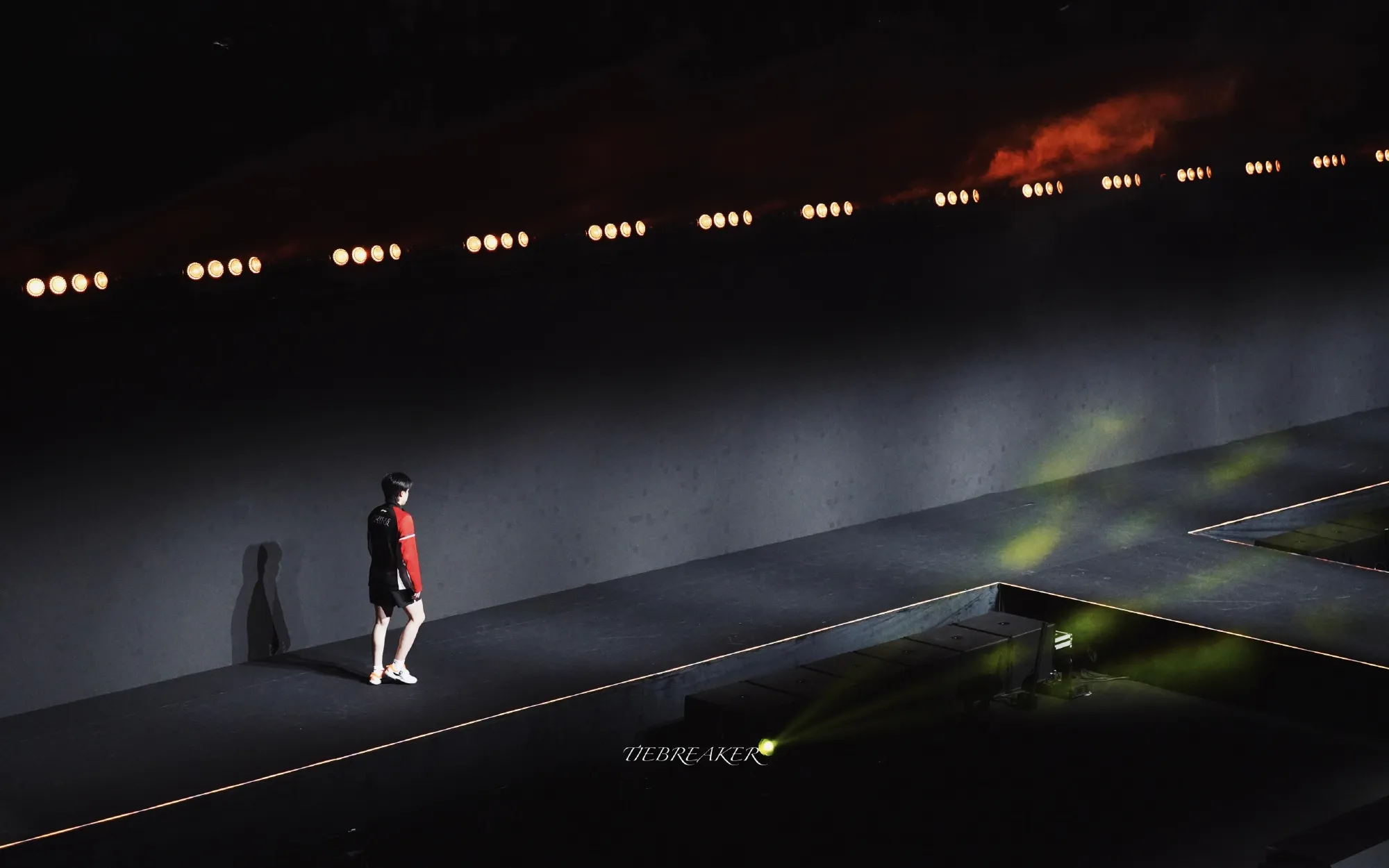
He stepped onto a roaring court, only to withdraw. Injury ended Wang’s semifinal before it began. WTT Finals 2025.
For many, Wang Chuqin’s story can’t be told without the shadow and shine of mixed doubles. As a left-hander shaped for the event since his teenage years, it became part of his identity. His partnership with Sun Yingsha grew into one of the defining legends of modern table tennis and opened a new chapter for the sport.
Yet behind all the victories, a quiet conflict lingered. Mixed doubles demand consistency, teamwork, and sacrifice, which built Wang’s success but held him back from chasing his singles dream. Within the Chinese national team, few players bear such divided expectations. His talent made him indispensable, but that same reliability bound him to endless training, overlapping events, and constant adjustment. While others focused on themselves, Wang moved between events, serving the team’s strategy before his own growth.
The story is about the balance between loyalty and ambition, duty and self. In that balance lies both the pride and the pain of left-handers… but not just left-handers.
The crazy sight of Wang once again fighting on (and being trapped in) three fronts at the 2025 China Smash made many pause and reconsider what mixed doubles truly means to him, both then and now. I can’t wait to share my dive and take.
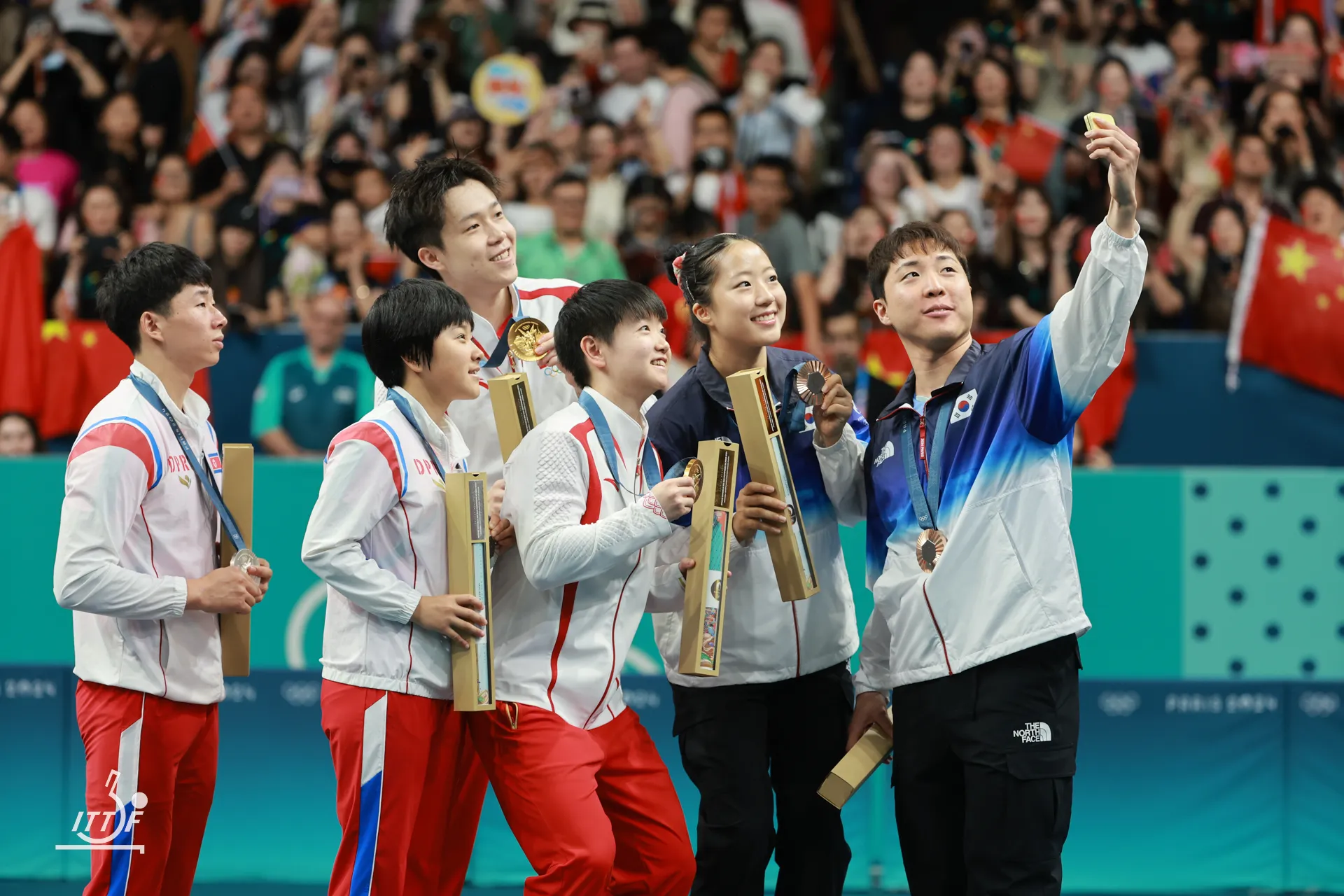
Medalists taking selfies at the mixed-doubles medal ceremony, Paris 2024 Olympics. Wang Chuqin and Sun Yingsha claimed Olympic mixed doubles gold and three consecutive World Championships titles, cementing their pairing as a modern table tennis legend.
Flying from the East Coast to Vegas in July isn’t wild. But spending a whole week there just to watch table tennis? Yeah, try explaining that to your friends.
Ngl, I didn’t expect much from the US Smash. Vegas was cooking at 110°, the venue looked straight out of 2004, and the energy felt… TBD. 🤣 It just didn’t seem like the kind of event where players go all out. Especially with Wang Chuqin, who was fresh off another world title in May. I figured he’d either pull out or just coast through it.
But nah. Tell me who lit up the court! Once again, our lionheart 🦁 surprised us.
I’m not gonna break down Wang’s matches play by play. Honestly, once I got into the arena, I was too caught up in the atmosphere to focus on the details. I just write whatever comes to mind, and if it’s a little chaotic, don’t mind me.
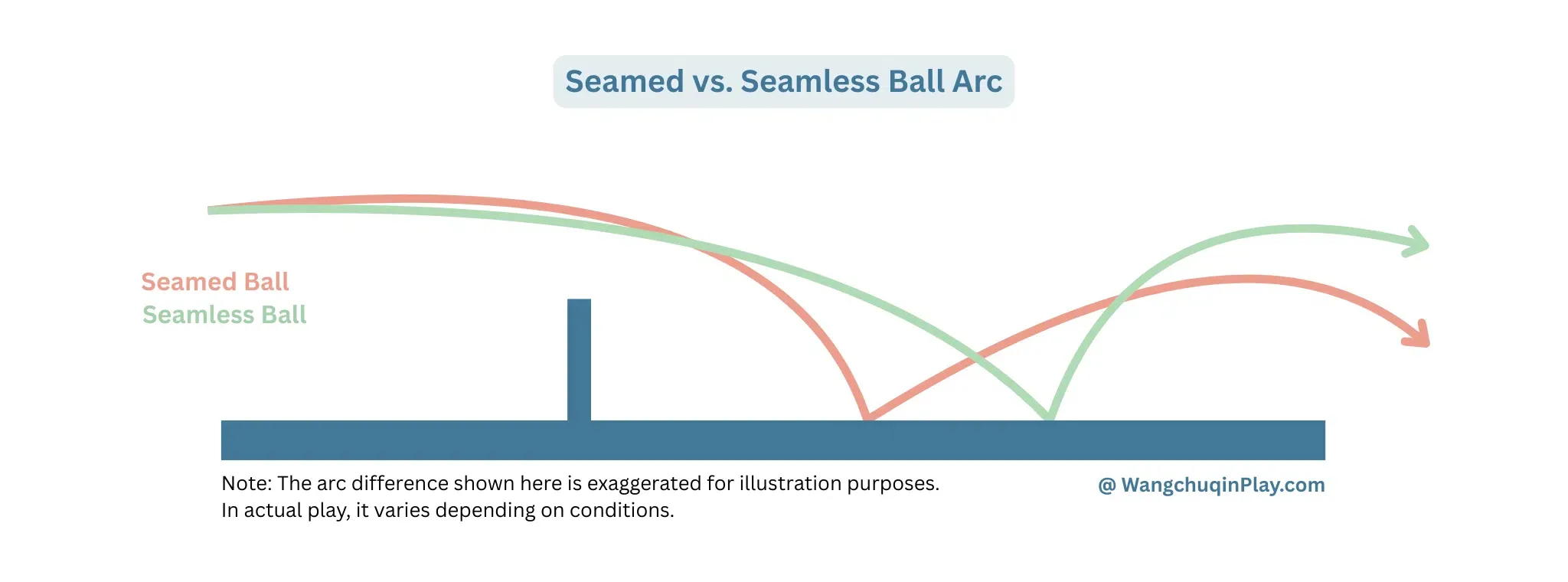
In table tennis, even the tiniest equipment tweak can throw everything off. Things like rubber thickness, blade construction, table surface, and even the arena’s humidity all shape how the game plays out. At the pro level, players rely on split-second timing, sharp instincts, and a fine-tuned sense of touch. When the feel changes, the whole balance collapses.
I started looking into seamless balls after noticing how many top players struggled at the 2024 Asian Championships and the 2025 World Cup. Their timing looked off, shots felt disconnected, and many just couldn’t find their groove. The deeper I looked, the more it felt like a rabbit hole. I’m still connecting the dots, but here’s what I’ve learned.
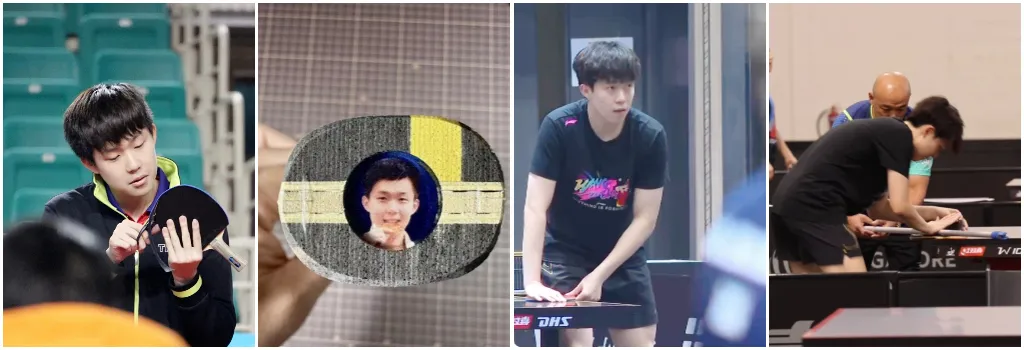
If you’ve watched Wang Chuqin play, you already know it’s wild, fast loops, nasty spin, and full of fire. A big part of that is his finely tuned weapon: the racket. And just as his playstyle has evolved, Wang’s racket setup has undergone profound changes over the years.
This post is all about what makes a pro racket, how Wang’s gear has evolved, and a few stories along the way, some cool and some kinda painful. Let’s get into it.
Wang Chuqin’s journey hasn’t followed the typical “find a mentor, rise to the top” storyline. Instead, he’s had to navigate a complicated maze of favoritism, random coach swaps, and limited resources. In a system where standing still means falling behind, most core CNT players have long benefited from dedicated supervising coaches, but Wang didn’t. He spent key years bouncing from one coach to another. Or sometimes, left completely on his own.
Coaching in table tennis involves way more than shouting, “Move your feet!” from the sidelines. It’s the backbone behind every champion. Especially in China, where everything runs like a well-oiled war machine with strategy, resources, you name it. And yet… somehow, Wang Chuqin pulled off the impossible: made history as ranked #1 in the world in singles, doubles, and mixed doubles at the same time, while never having the full coaching support his peers enjoy.
How does that even happen?
To unravel this mystery, we need to take a closer look at how the Chinese National Table Tennis Team operates, why coaching is so crucial, and how Wang Chuqin slipped through the cracks.
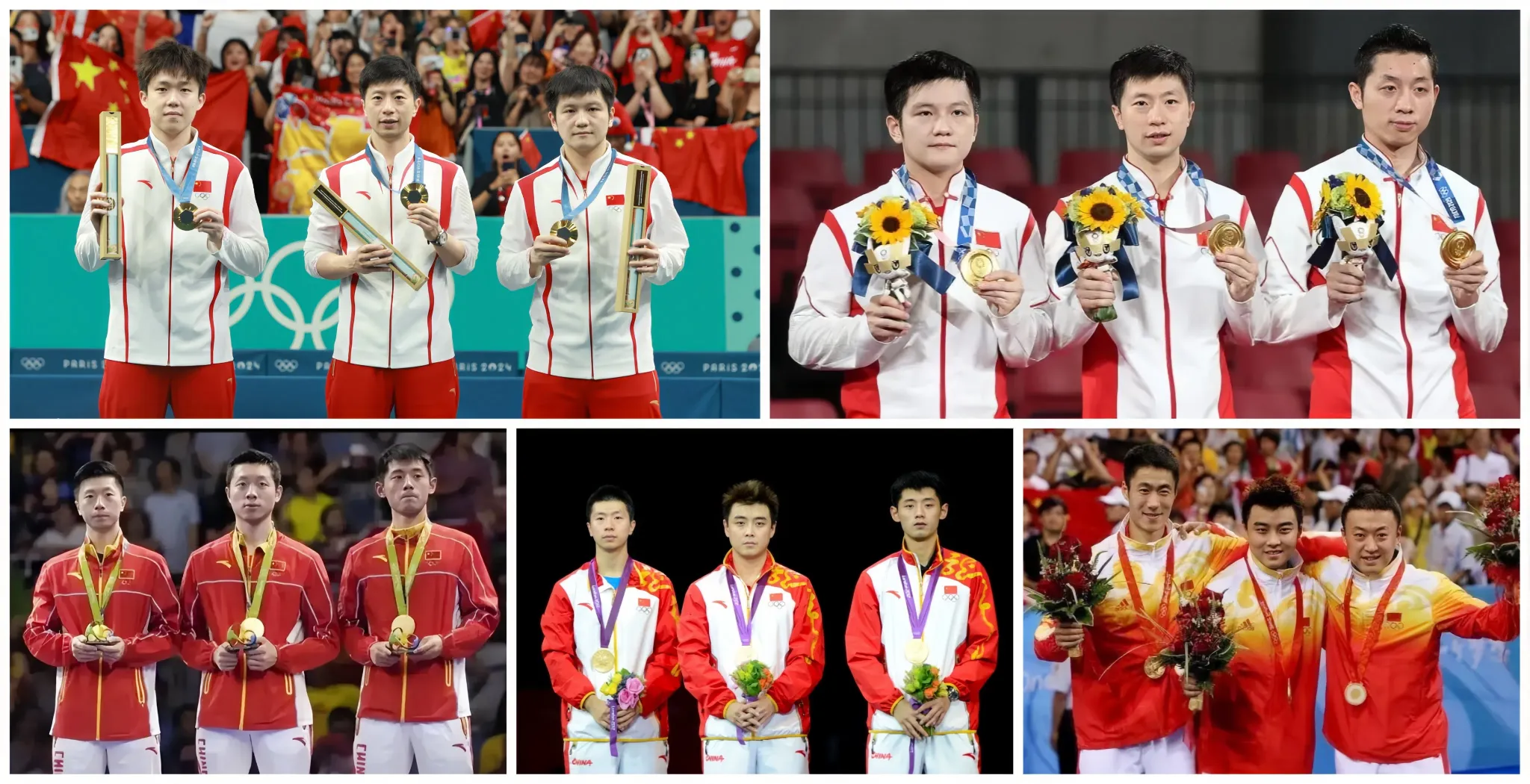
Olympic Table Tennis Men’s Teams Gold 2008-2024 “The Echelon-based team development has been a cornerstone of CNT’s long-term dominance.”(more…)
Manage Consent
To provide the best experiences, we use technologies like cookies to store and/or access device information. Consenting to these technologies will allow us to process data such as browsing behavior or unique IDs on this site. Not consenting or withdrawing consent, may adversely affect certain features and functions.
Functional
Always active
The technical storage or access is strictly necessary for the legitimate purpose of enabling the use of a specific service explicitly requested by the subscriber or user, or for the sole purpose of carrying out the transmission of a communication over an electronic communications network.
Preferences
The technical storage or access is necessary for the legitimate purpose of storing preferences that are not requested by the subscriber or user.
Statistics
The technical storage or access that is used exclusively for statistical purposes.The technical storage or access that is used exclusively for anonymous statistical purposes. Without a subpoena, voluntary compliance on the part of your Internet Service Provider, or additional records from a third party, information stored or retrieved for this purpose alone cannot usually be used to identify you.
Marketing
The technical storage or access is required to create user profiles to send advertising, or to track the user on a website or across several websites for similar marketing purposes.