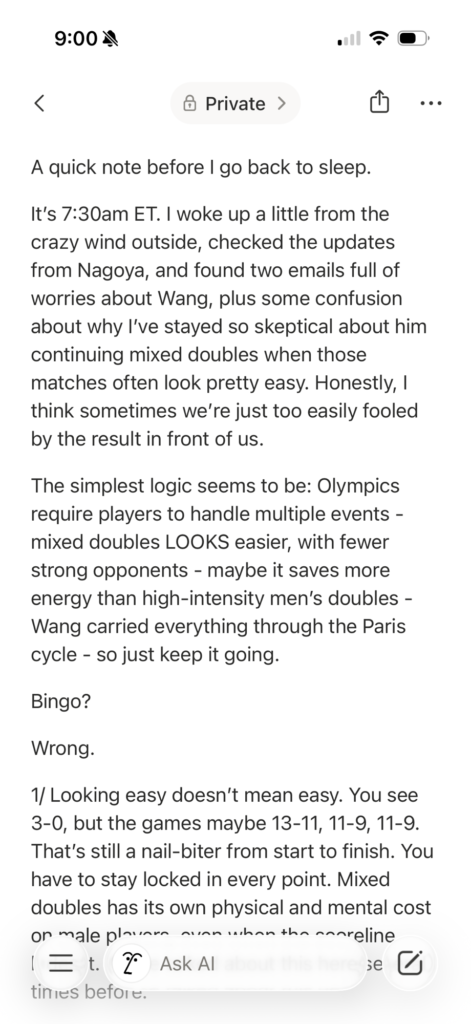
Sept 25, 2026: It’s 7:30am ET. I woke up a little from the crazy wind outside, checked the updates from Nagoya, and found two emails full of worries about Wang, plus some confusion about why I’ve stayed so skeptical about him continuing mixed doubles when those matches often look pretty easy. These are the things I can pull together at this moment. I tried to stay awake and keep this short, and somehow it got long again. I’ll try to reorganize these thoughts into another post later. And as always, feel free to message me with your thoughts too. 🍻
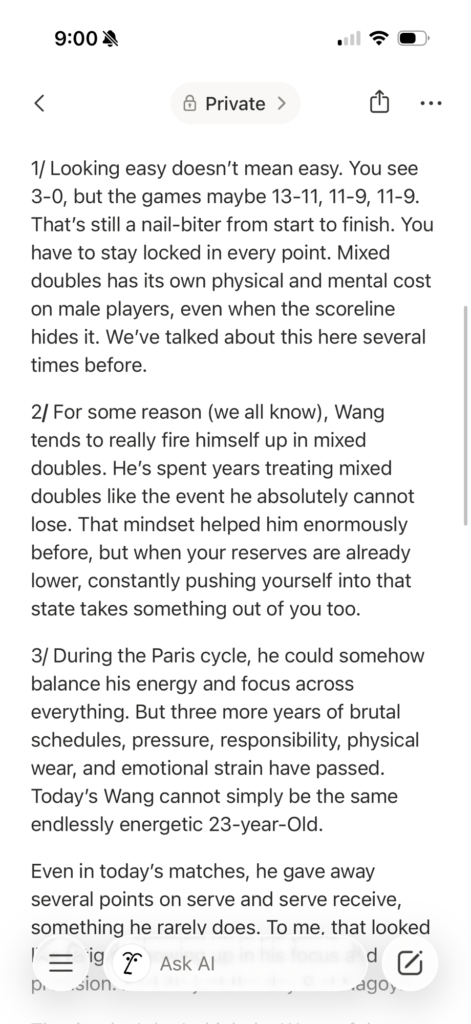
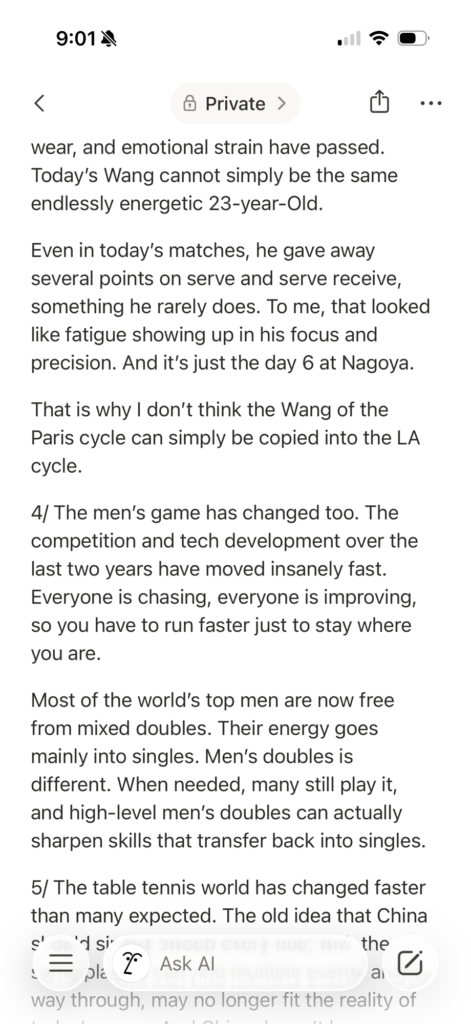
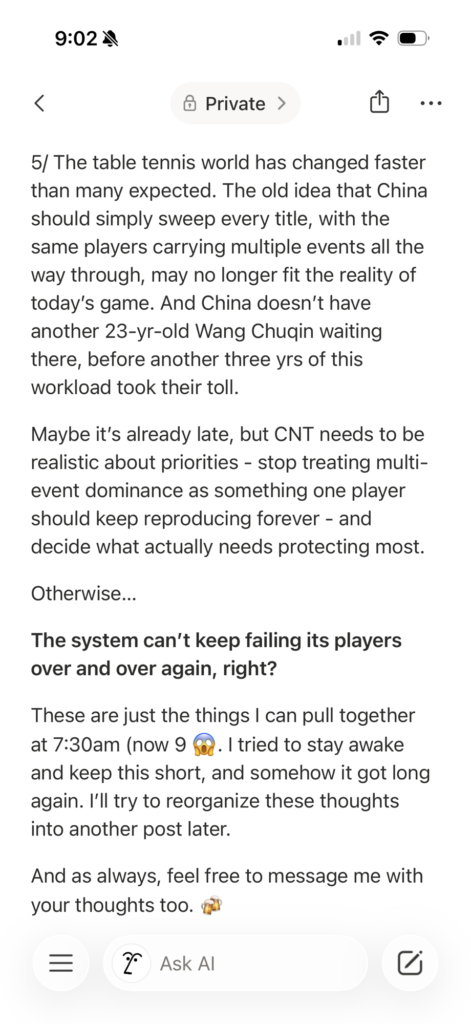
Sept 24, 2026: The Chinese men’s team failed to defend its Asian Games title today. Honestly, the result didn’t feel completely unexpected. Many had already thought something like this might happen in London months ago.
Beyond technique and individual form, two familiar problems about CNT showed up again. First, as always, the coaching looked overconfident and underprepared. Changing the usual lineup order and putting WRB, a complete newcomer to the team event, in a position where he might have to play twice in the final was a huge risk. We understand the logic behind the decision, but the plan still seemed to depend on Wang Chuqin taking both of his matches and keeping China away from the decider, leaving almost no room for error. The player CNT relies on most is also the player it keeps asking to carry the most.
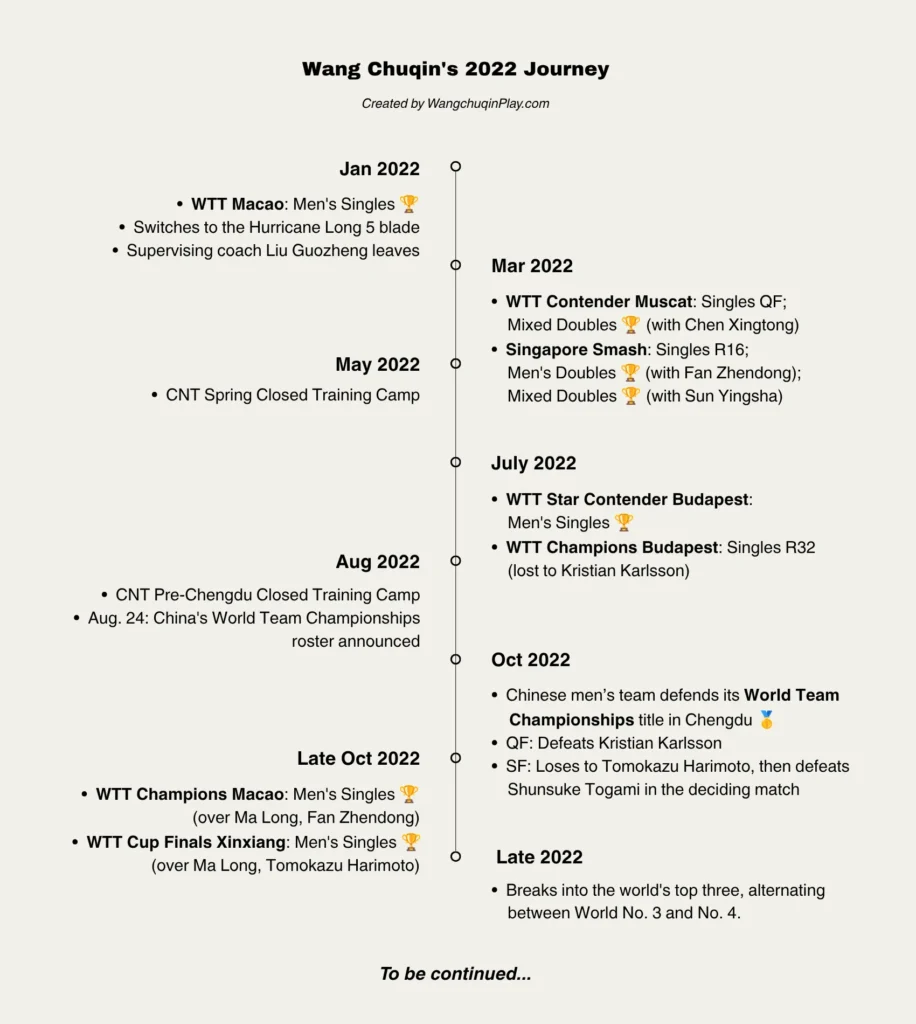
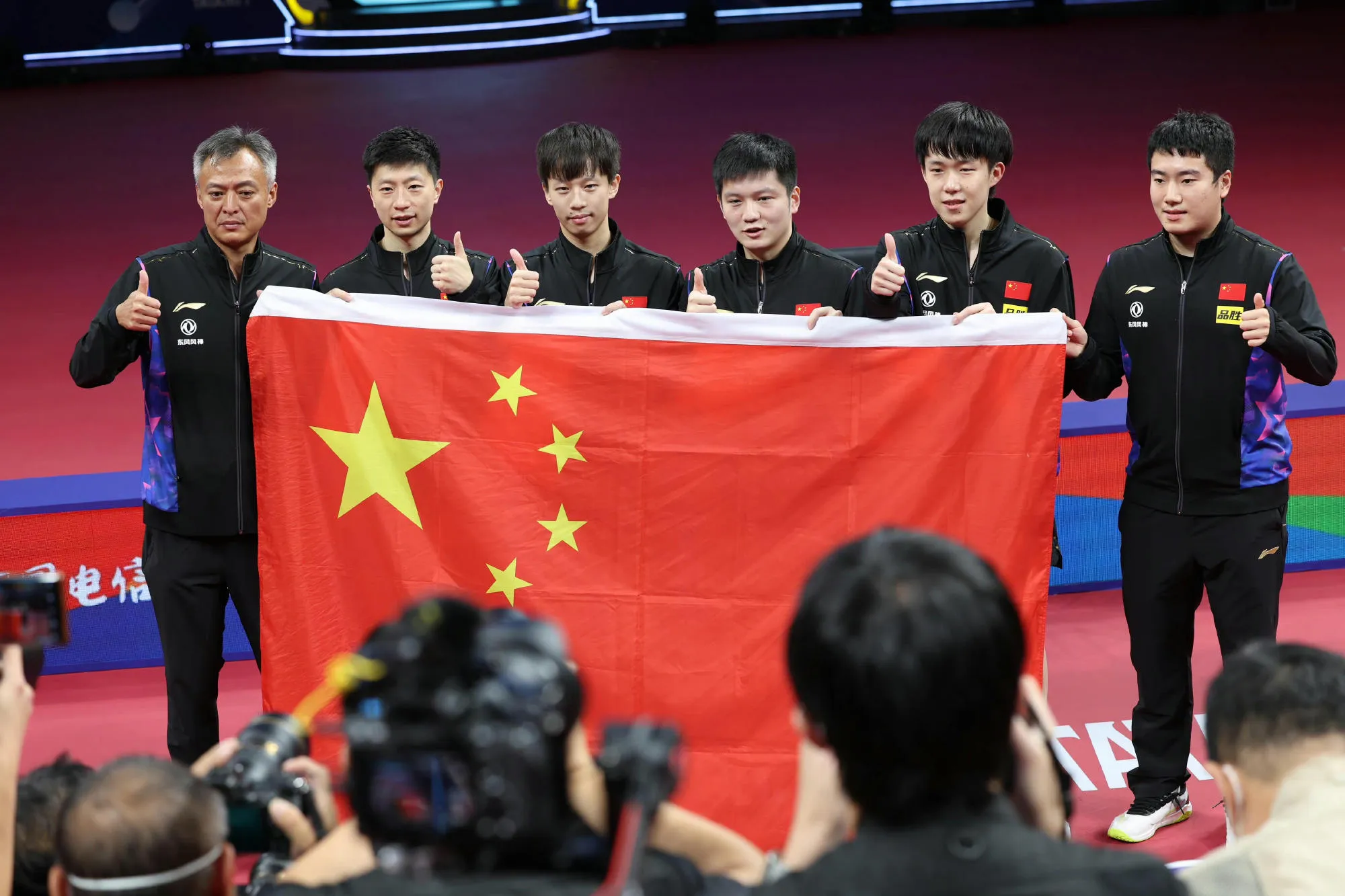
This lineup also took me back to the 2022 Chengdu World Team Championships semifinal against Japan (Wang’s 2022: The Year Chengdu Changed Everything). China’s A-position player FZD won one match and lost the other, much like Wang today, while Wang, then the newcomer in the B position, recovered from his first loss to win the decider and send China through 3-2. Today, WRB was put in almost exactly the same position and couldn’t pull it off. But I don’t blame him. You can’t expect every young player to be another young Wang Chuqin.
Then there’s the workload. Once again, we clearly see what shouldering multiple events at once can eventually demand from a player. Just the day before, Wang had played five matches within 24 hours, constantly switching between events and the different demands each one brings. More on that here: Structural Fatigue. Unsustainable, and Wang’s Extra Burden in Mixed Doubles.
Wang has carried one of the toughest workloads in world table tennis for years. The three years since the Hangzhou Asian Games aren’t three ordinary years. You can’t expect today’s Wang to still have the physical freshness, energy, and fire of his 23-year-old self while also carrying three more years of experience, responsibility, and pressure. For too long, it has felt like CNT kept borrowing from his future to solve the present.
Add the pressure of carrying the whole team, and today looks less like something that suddenly went wrong than something the system had been leaving itself open to for years. Maybe today. Maybe much earlier. Japan earned the win. But from the Chinese side, this loss doesn’t belong only to the players at the table. The system failed them too.
If this isn’t a wake-up call for the CNT coaches, I don’t know what is. 📢 Though I doubt they’ll change.
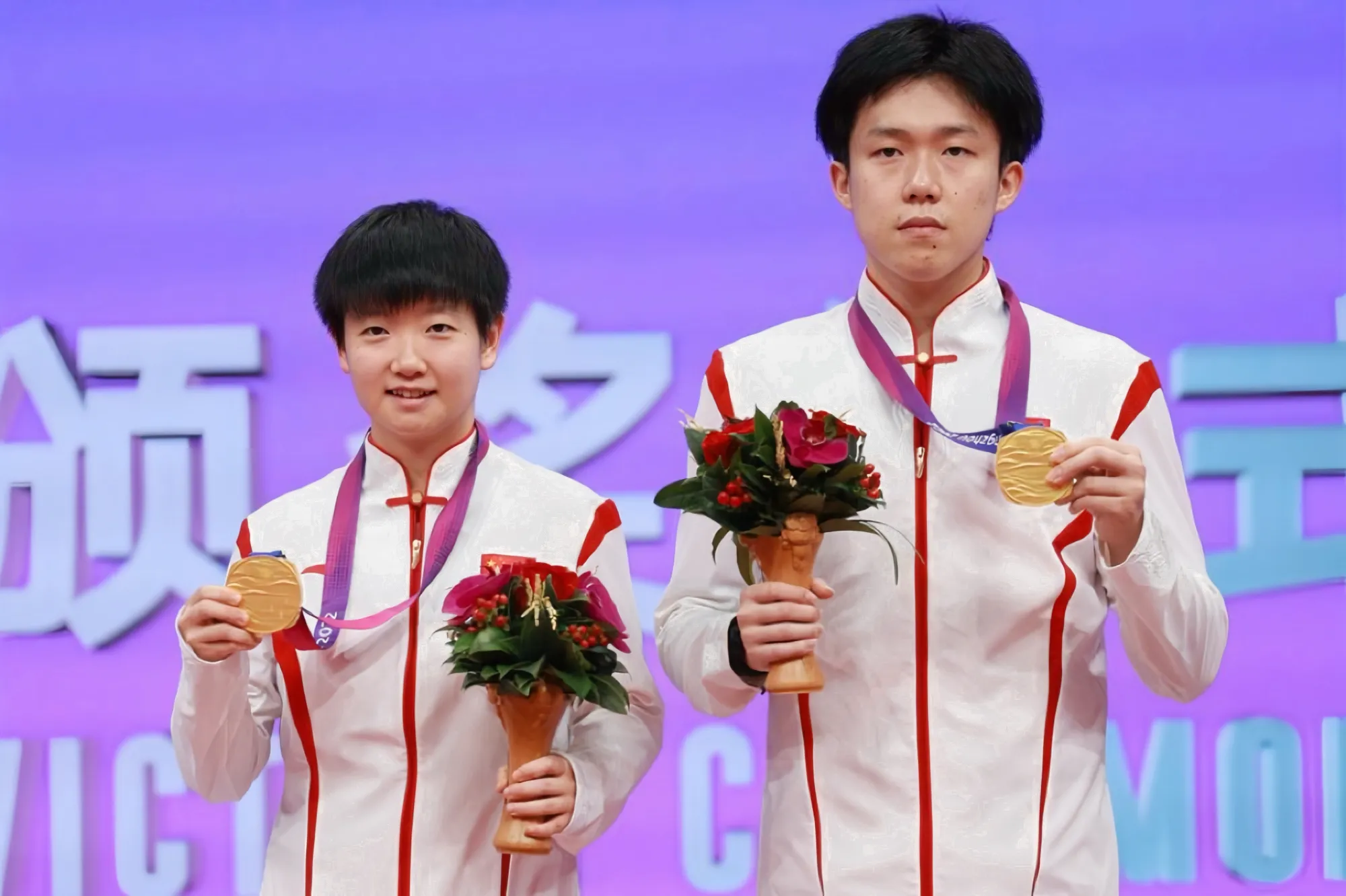
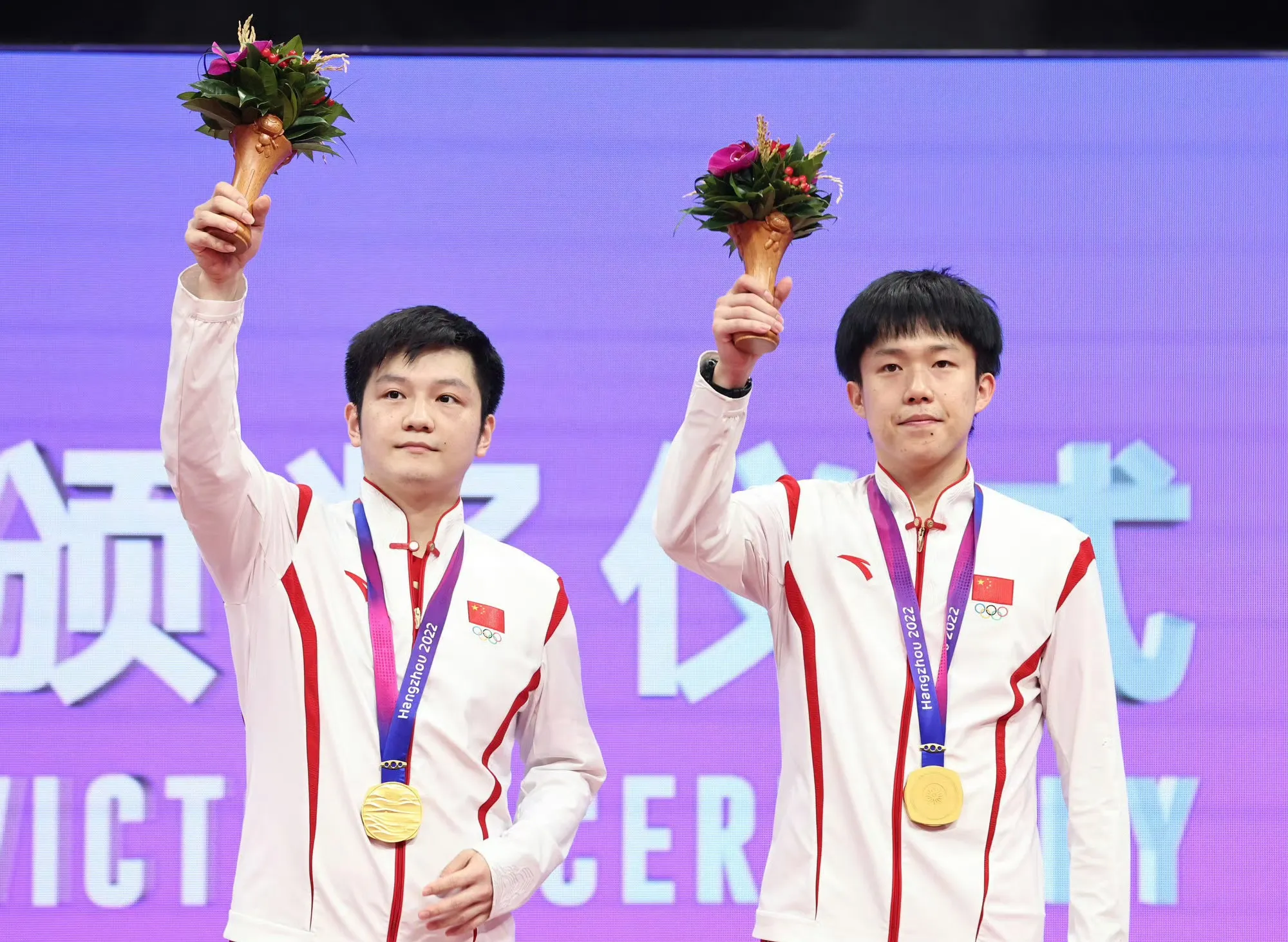
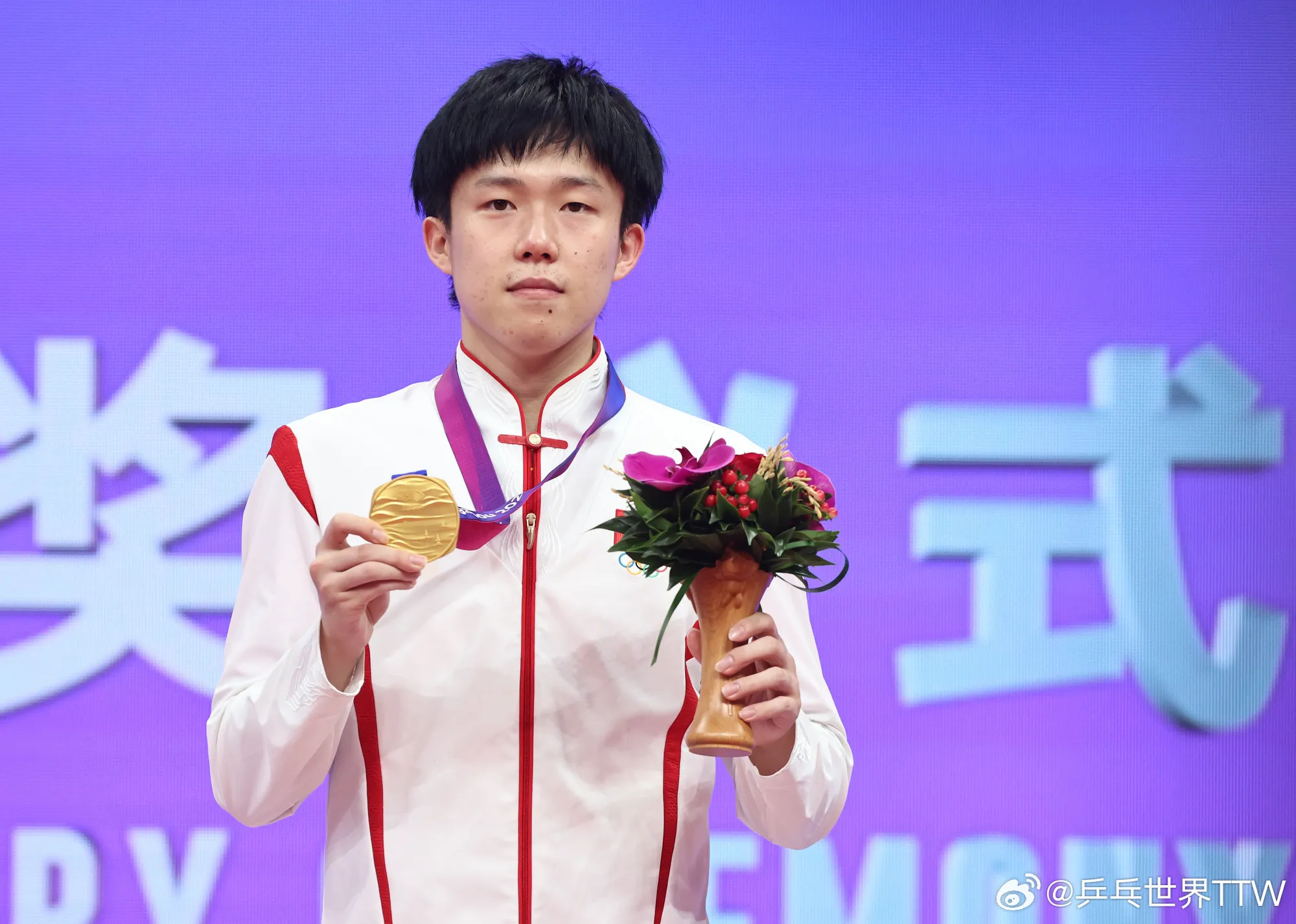
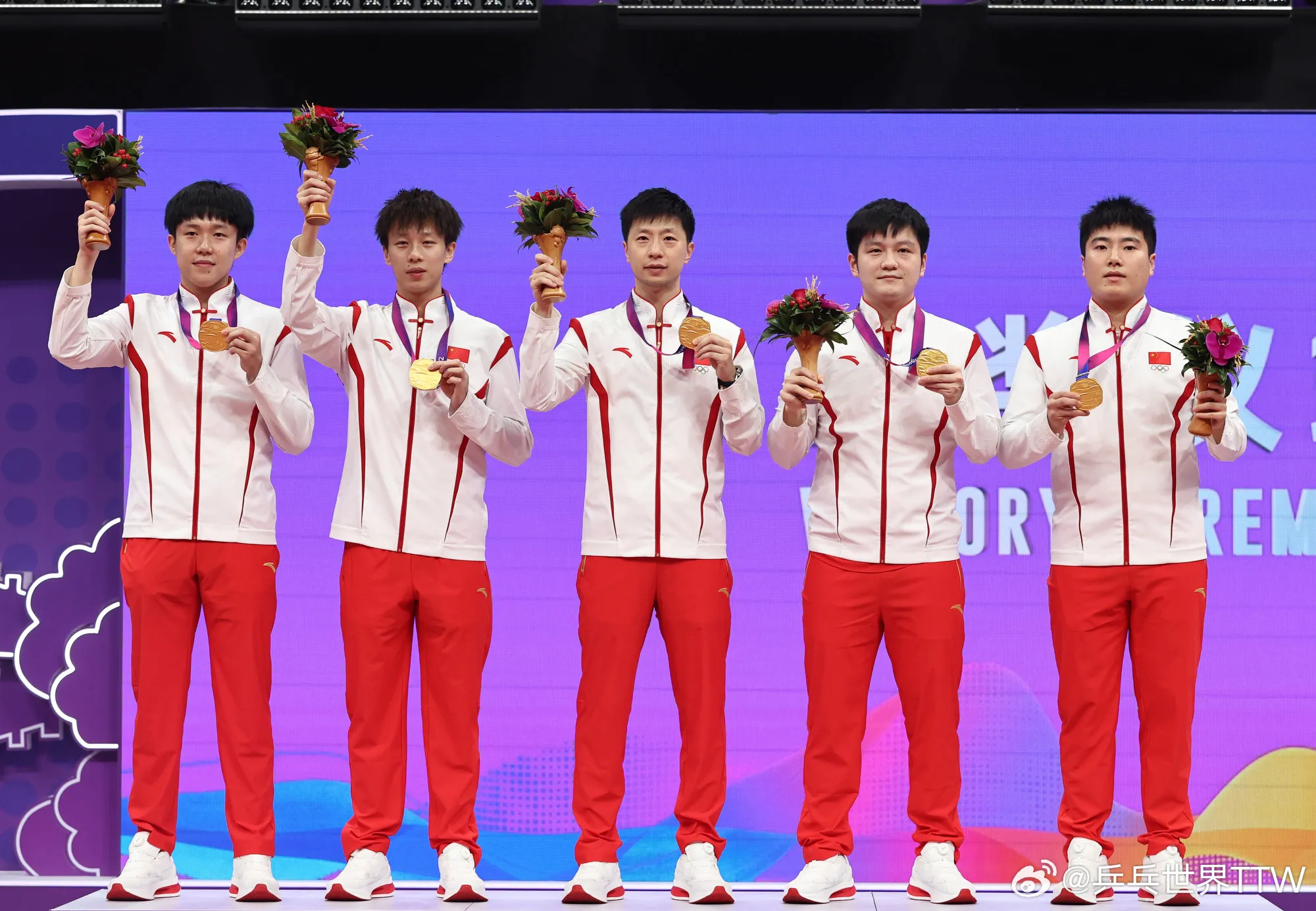
Sept 15, 2026: A month of on-set work, way too many boring NYFW runway reviews, a sprained wrist, and summer-to-fall allergies later… 😪 I’m finally ready for the Asian Games. With Aichi-Nagoya coming up this weekend, time to look back at Hangzhou 2023: The Four-Title Crown: Wang at the 2023 Hangzhou Asian Games
(more…)