By the time 22-year-old Wang Chuqin stepped onto the court at the World Team Championships in Chengdu, his year had already taken several turns. He had earned his place on the team. That much was clear. But was he ready to become the player Team China would one day rely on?
Continuing from Why Chengdu 2022 Mattered: Team China at a Turning Point
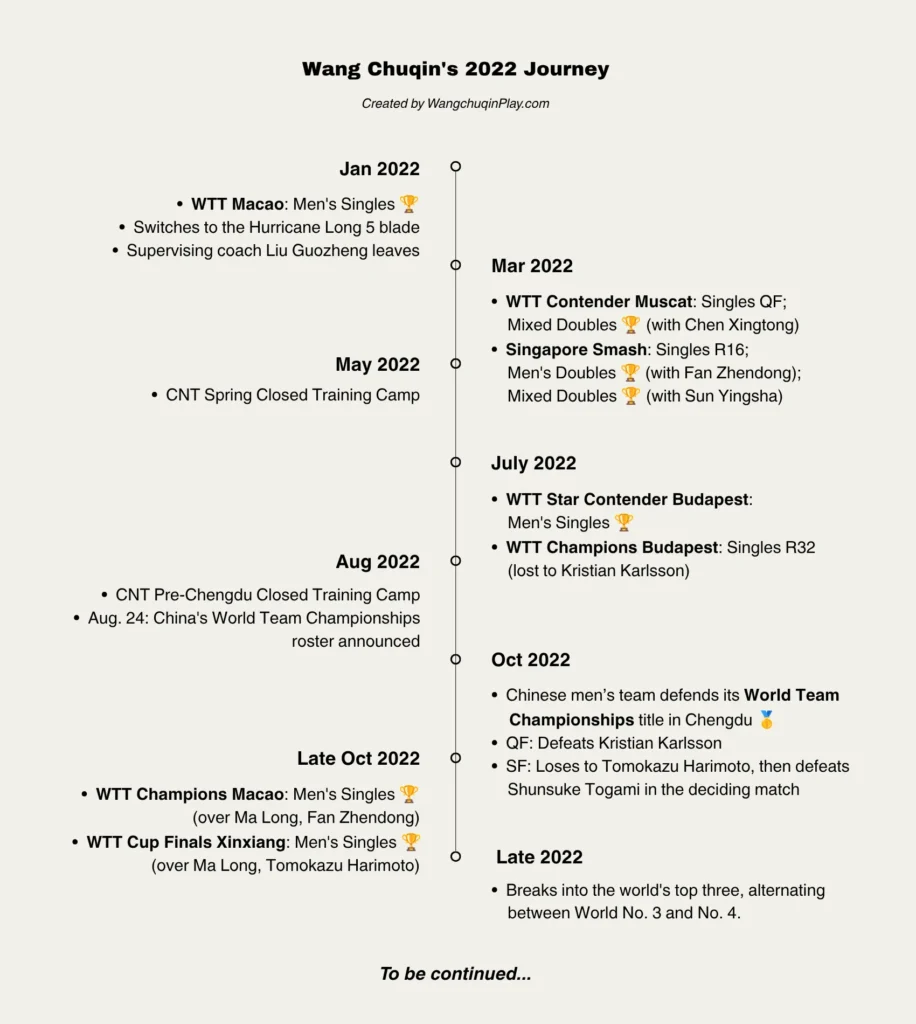
At 4-9, he was on the edge.
Wang was trailing in the deciding game, in a moment that carried weight far beyond a single point. Everything around him seemed about to collapse, and yet somehow, he held on.
1. Before Chengdu: A Year of Movement and Uncertainty
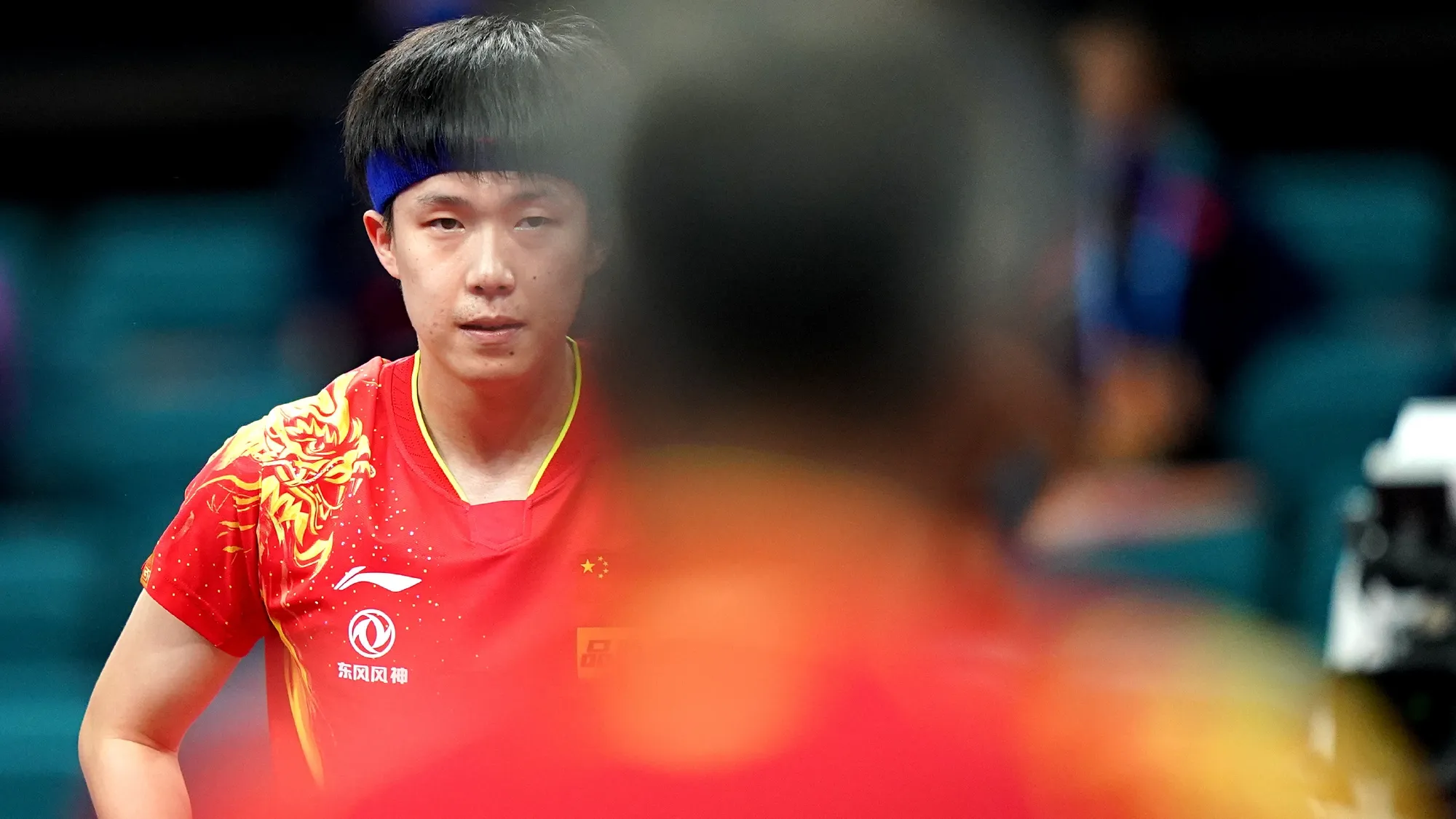
At the start of 2022, Wang was ranked World No. 12.
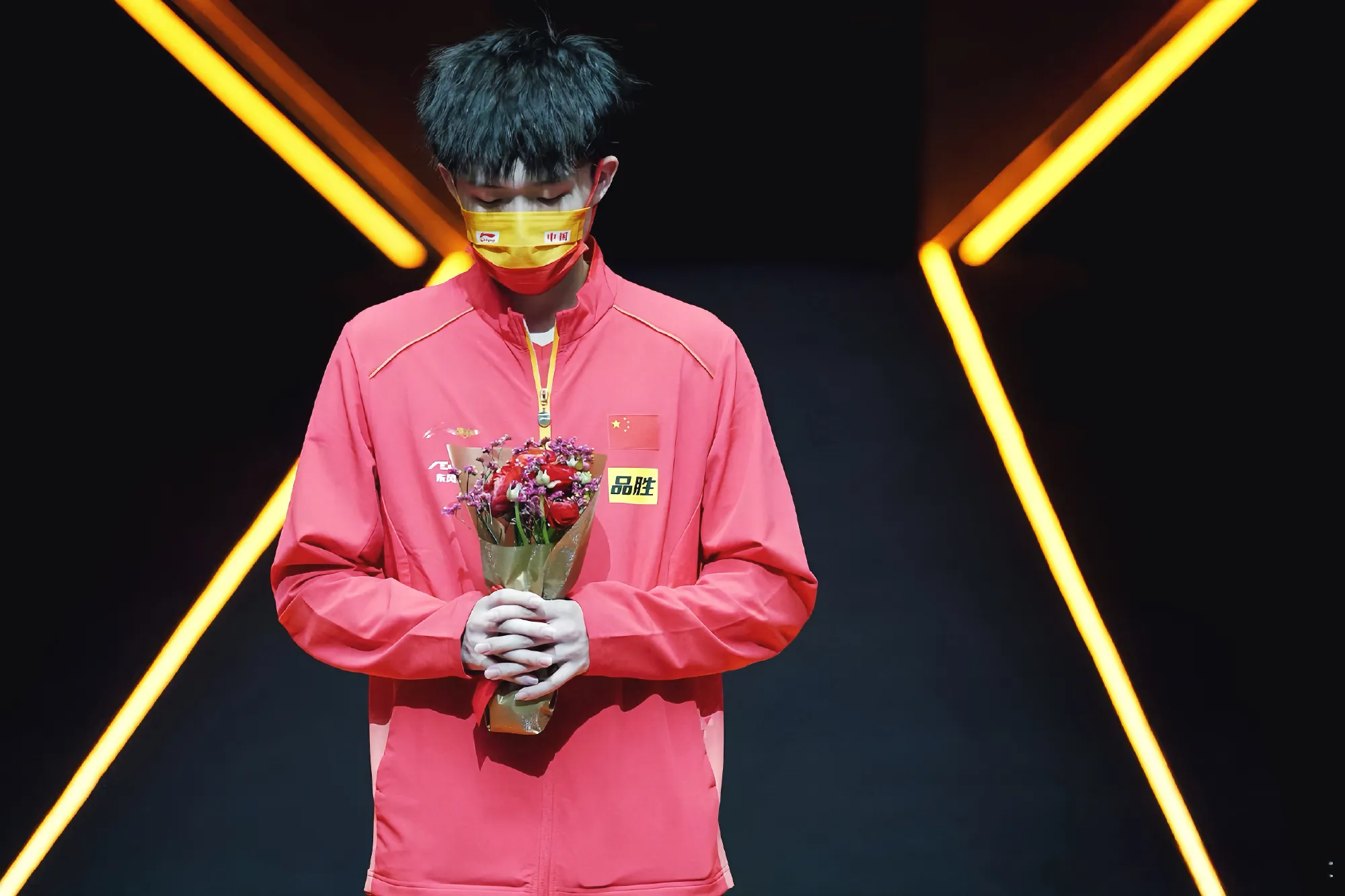
In January, he ended an 840-day singles title drought at WTT Macao. Because of pandemic restrictions, the field was made up mostly of Chinese players, but that hardly made the path easier. Wang still had to beat Xue Fei, Ma Long, Xu Xin, and Lin Gaoyuan in succession. Against Lin in the final, he built an early lead, watched Lin drag himself back into the match, and finally closed it out 14-12 in the sixth game.1
Reflecting on that period, he said, “Maybe I wasn’t one of those players who broke through overnight. But I kept moving forward, like a snail, slowly but steadily. My passion kept me going. I’m grateful I’ve never stopped fighting.”2
Around that time, Wang made a major equipment change, switching from Butterfly Viscaria to Hurricane Long 5. It pointed to a shift in his game, with more focus on control and stability.
Then came another turning point. His supervising coach, Liu Guozheng, left the national team. From that point on, Wang had to move through the year without a fixed coach or a clearly structured training plan.
The calendar kept moving.
At WTT Contender Muscat, Wang reached the singles quarterfinals, where he lost to Xiang Peng, and won mixed doubles with Chen Xingtong. At Singapore Smash, he lost to Ma Long in the Round of 16, but captured men’s doubles with Fan Zhendong and mixed doubles with Sun Yingsha.
After Singapore, tournaments largely disappeared from the schedule for several months. The CNT entered a cycle of closed training, including a five-week camp in Shandong starting in late May. Wang described that period as simple and repetitive, moving between the dormitory and training hall every day. Physically demanding, but mentally calm.3
By July, he was back on the international stage.
There had been rumors that WTT had originally planned a Europe Smash that summer, but financial realities got in the way. Instead, the schedule turned into the European Summer Series, split between a Star Contender and a Champions event in Budapest, Hungary.
At WTT Star Contender Budapest, Wang entered as World No. 14 and produced arguably his strongest singles run to that point. He defeated Hugo Calderano (World No. 4), Lin Yun-Ju (No. 6),4 Ma Long (No. 2), and Truls Moregard (No. 5) in succession to win the title.
The run was even more impressive considering his workload. Alongside singles, he was also competing in men’s doubles and mixed doubles, with seven matches packed into two days. Partnering with Wang Manyu despite her leg injury, he also captured the mixed doubles title, defeating top seeds Tomokazu Harimoto and Hina Hayata along the way.5
In mixed doubles, the male player is generally expected to take the initiative and take more risks. But this time, even more fell on Wang. “I had to take responsibility,” he said. “I wanted to put more power and spin on my shots so my partner could better handle the returns.”6
Just days later, in the same arena at WTT Champions Budapest, Wang lost 2-3 in the opening round to Kristian Karlsson, World No. 16.7
That defeat ended a remarkable streak. It was Wang’s first singles loss to a non-Chinese player in more than three years, dating back to the China Open in May 2019. Between then and Budapest, most of his early exits had come against Chinese teammates. (That’s another interesting topic I’ll come back to in a future post.)
Remember that loss. Two and a half months later, Wang and Karlsson would meet again in Chengdu.
He returned home carrying both an unexpected title and a painful reminder of how quickly momentum can turn. Soon afterward, the CNT announced its roster for the World Team Championships in Chengdu. The team then entered another round of closed training to prepare for Chengdu.
Those were the five events Wang played before the 2022 World Team Championships. A title in Macao. A coach leaving. Months of closed training. A breakthrough run in Budapest. A disappointing loss days later.
By the time he arrived in Chengdu, his year had already been full of movement, uncertainty, and growth. Now all of that would be tested inside a team event.
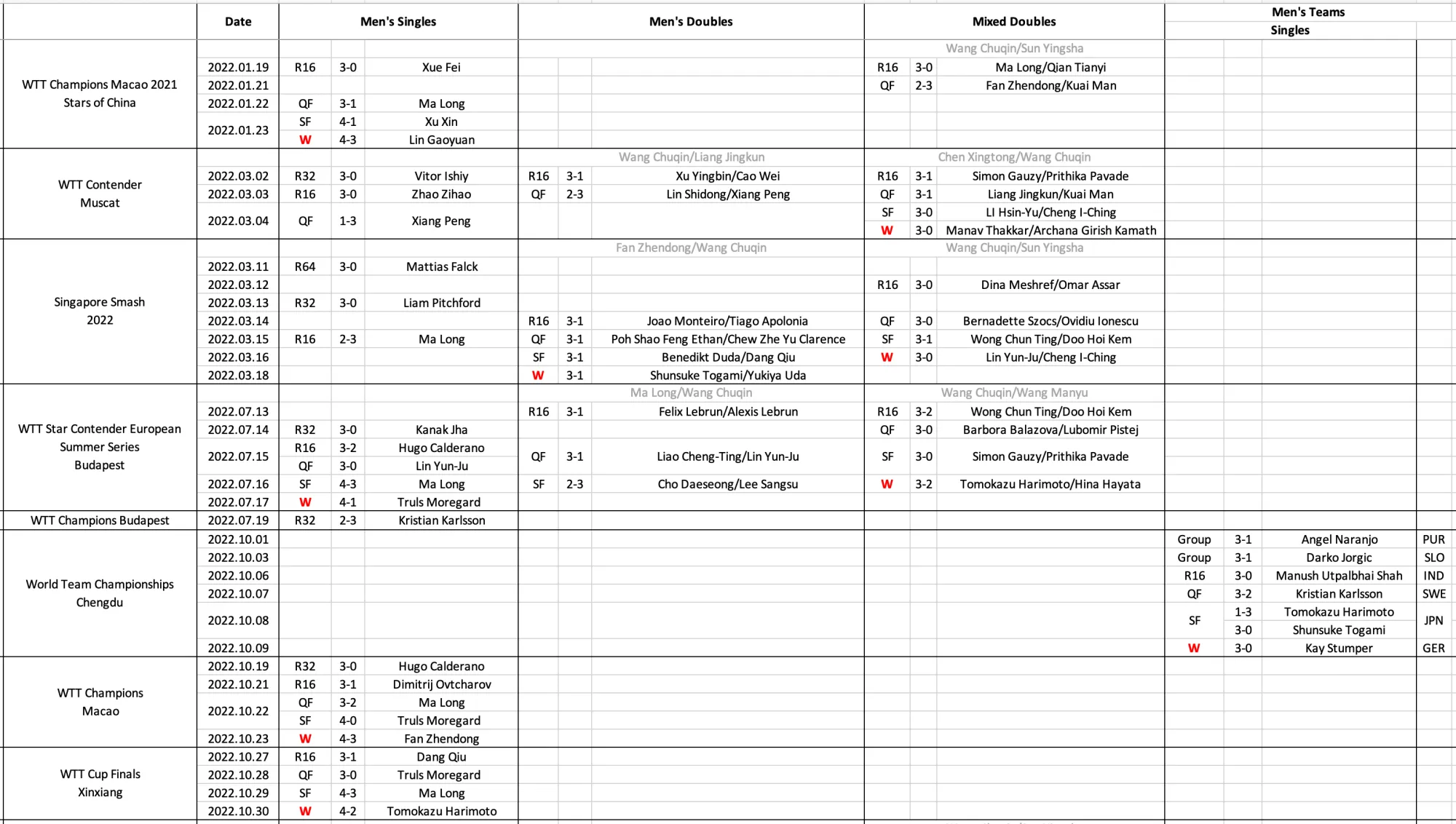
- Watch this YouTube Playlist for all of Wang’s matches from 2022.
2. Chengdu: Where the Year Narrowed to One Tournament
The 2022 World Team Championships in Chengdu marked the long-awaited return of the event after the 2020 edition was canceled due to the COVID pandemic.
It was held in China during the National Day holiday under extremely strict quarantine measures. No crowd filled the arena, but millions were still watching, waiting, and weighing every point.
Beyond that, the Chinese national team was entering a generational transition, and Chengdu became an early turning point in the next Olympic cycle. Could Ma Long, Fan Zhendong, and Wang Chuqin become the team’s solid core? Could China continue the dominance that had defined men’s table tennis for two decades?
At first, China made it look routine, advancing through the group stage and the Round of 16 with little trouble, winning every tie 3-0. Then the quarterfinal against Sweden changed the tone.
2.1 Quarterfinal Against Sweden: Facing Karlsson Again
China and Sweden share a long history at the World Team Championships. China had won 11 of the previous 12 men’s team titles, with only one interruption. That came from Sweden in 2000.8
This Swedish team was not easy to brush aside, featuring Truls Moregard, the 2021 WTTC singles silver medalist, veteran Mattias Falck, and WTTC doubles champion Kristian Karlsson.
Fan Zhendong and Ma Long won the first two matches to give China a 2-0 lead. Wang stepped to the table for the third match against Karlsson, the same player who had beaten him in Budapest only a few months earlier.
At the start, Wang looked hesitant, especially in the backhand exchanges, and dropped the opening game to a more aggressive Karlsson. The second game swung back and forth before Wang lost it 11-12.
Down 0-2. Was Wang about to lose to Karlsson again?
The third game brought a change. Wang began targeting Karlsson’s middle more often, disrupting his rhythm in the rallies. The adjustment worked immediately. Wang took the game 11-3. In the fourth, he built a lead, watched Karlsson fight back, and called a timeout to steady himself. This time, he held on.
At 2-2, the momentum had completely shifted. In the deciding game, Wang seemed to catch fire. More active, more expressive, shouting after points, and fully engaged. He closed out the comeback and gave China a 3-0 victory over Sweden.
Afterward, Wang admitted how nervous he had been at the start. “I was very nervous in the first game. My opponent played very well and fought for every point. I was really happy to come back from 0-2 down, so I roared. But I still have to hold my breath. There are more matches ahead.”
He was right. The hardest night of the tournament was still waiting. In the semifinal, China would face Japan.
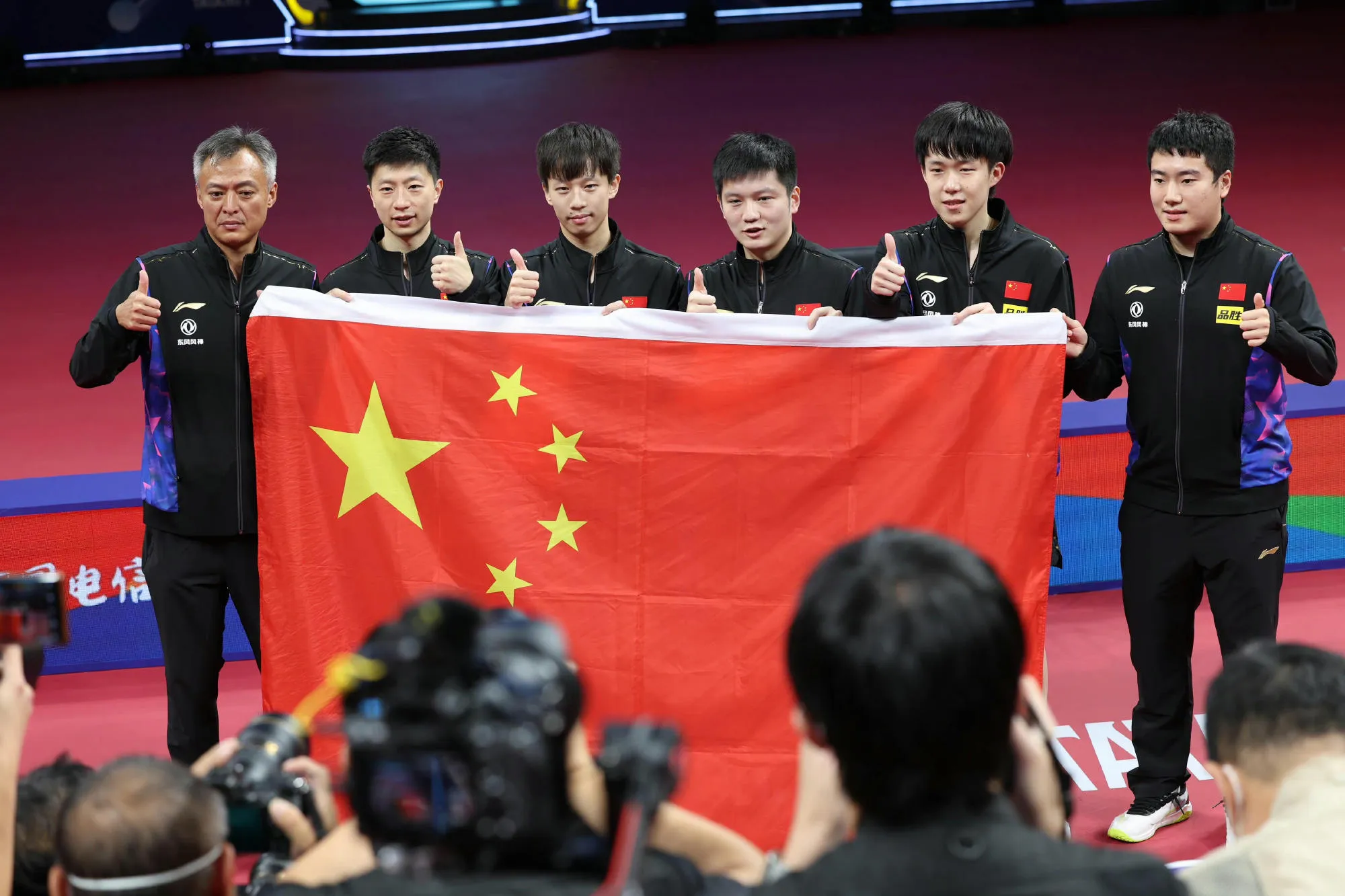
2.2 Semifinal Against Japan: Everything on the Line
This match carried weight beyond sport.
China and Japan have shared one of the fiercest rivalries in international table tennis for decades. The semifinal also took place during China’s National Day holiday, against the broader historical backdrop of World War II. The timing drew enormous public attention and stirred strong nationalist sentiment.
Japan brought a strong lineup led by World No. 4 Tomokazu Harimoto, who was still only 19 at the time. Alongside him was 21-year-old Togami Shunsuke, the freshly crowned Japanese national champion, who had already defeated Hugo Calderano during the group stage.
2.2.1 A Setback Against Harimoto
This semifinal was thrilling enough to make fans jump off the couch.
The tie began well for China. Fan Zhendong swept Togami Shunsuke 3-0 to give the team an early lead.
Next up was Wang against Harimoto. The two had been rivals and friends since their teenage years, but hadn’t faced each other in international competition for nearly three years. Wang grabbed the opening game but failed to maintain his form. Harimoto adjusted quickly, handled Wang’s long serves well, and took control of many of the rallies with his increasingly dangerous forehand attack. He won the next three games in a row, leveling the team score at 1-1.9
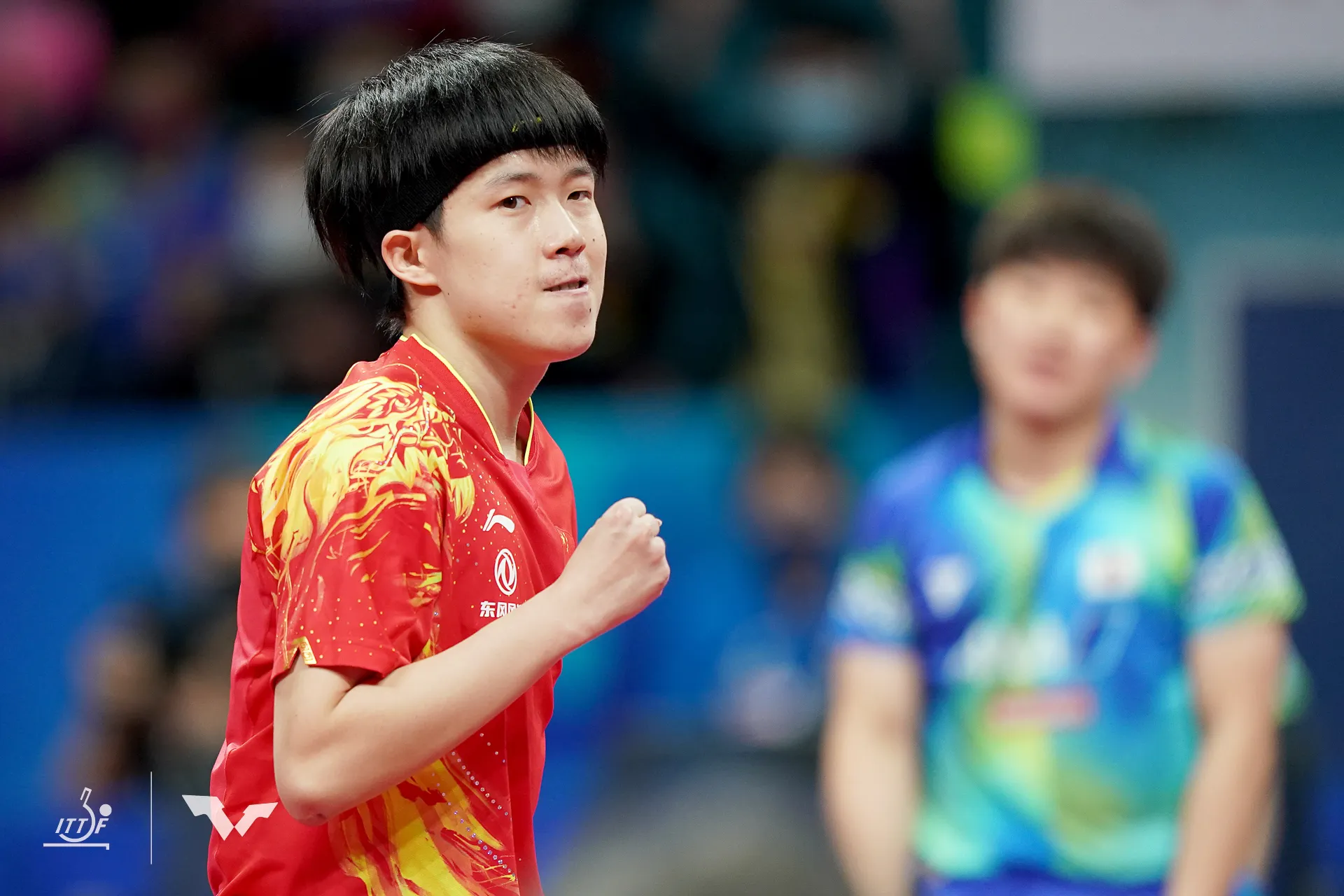
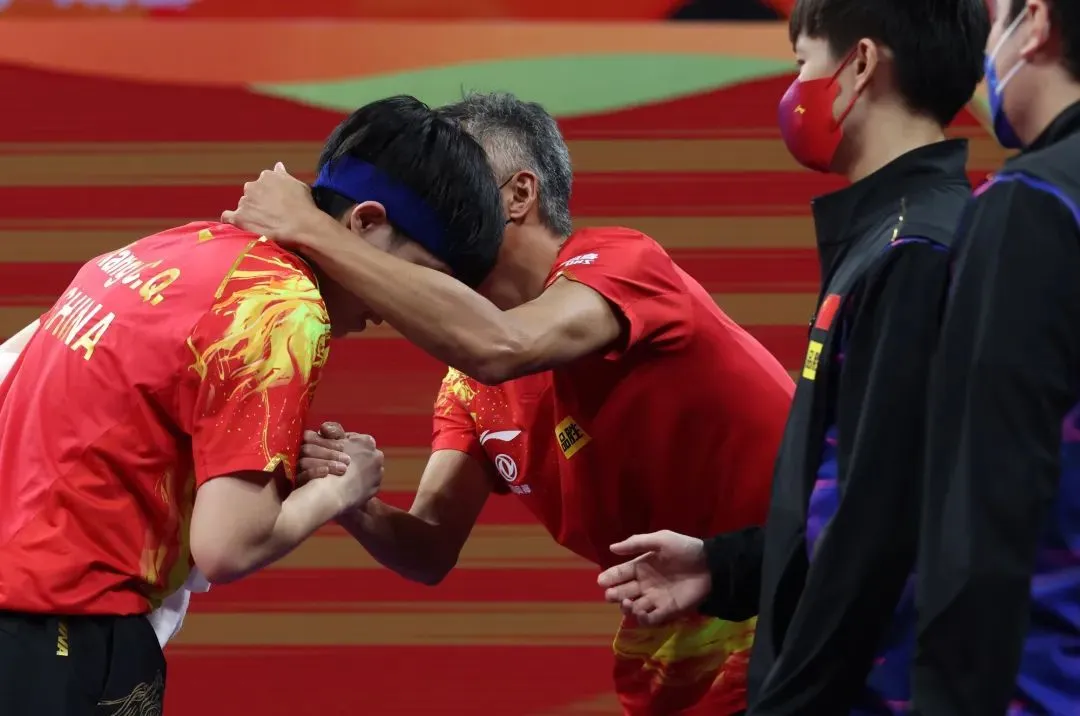
“I misjudged myself,” Wang admitted afterward. “Some balls I thought should have landed on the table didn’t. Some balls I should have controlled, I didn’t control. Gradually, I couldn’t manage the score because of the psychological gap.”10
Harimoto was equally candid. He later said he had guessed China would send Wang against him because Wang had dominated their previous meeting. “Compared with Wang’s recent performances, the mistakes he made today were surprising. I could feel how much strain this kind of match puts on Chinese players.”
Fortunately for China, Ma Long once again played the stabilizer. He defeated Mizuki Oikawa and restored China’s lead at 2-1. The fourth match brought Fan Zhendong and Harimoto back to the table.
Coming in, Fan held a 5-1 head-to-head advantage. But Harimoto was fearless. After dropping the second and third games, he kept attacking relentlessly and forcing long, high-pressure rallies, even as Fan continued to vary his serves and placements. In the end, the famously tough Fan lost the last two games to an even tougher Harimoto.
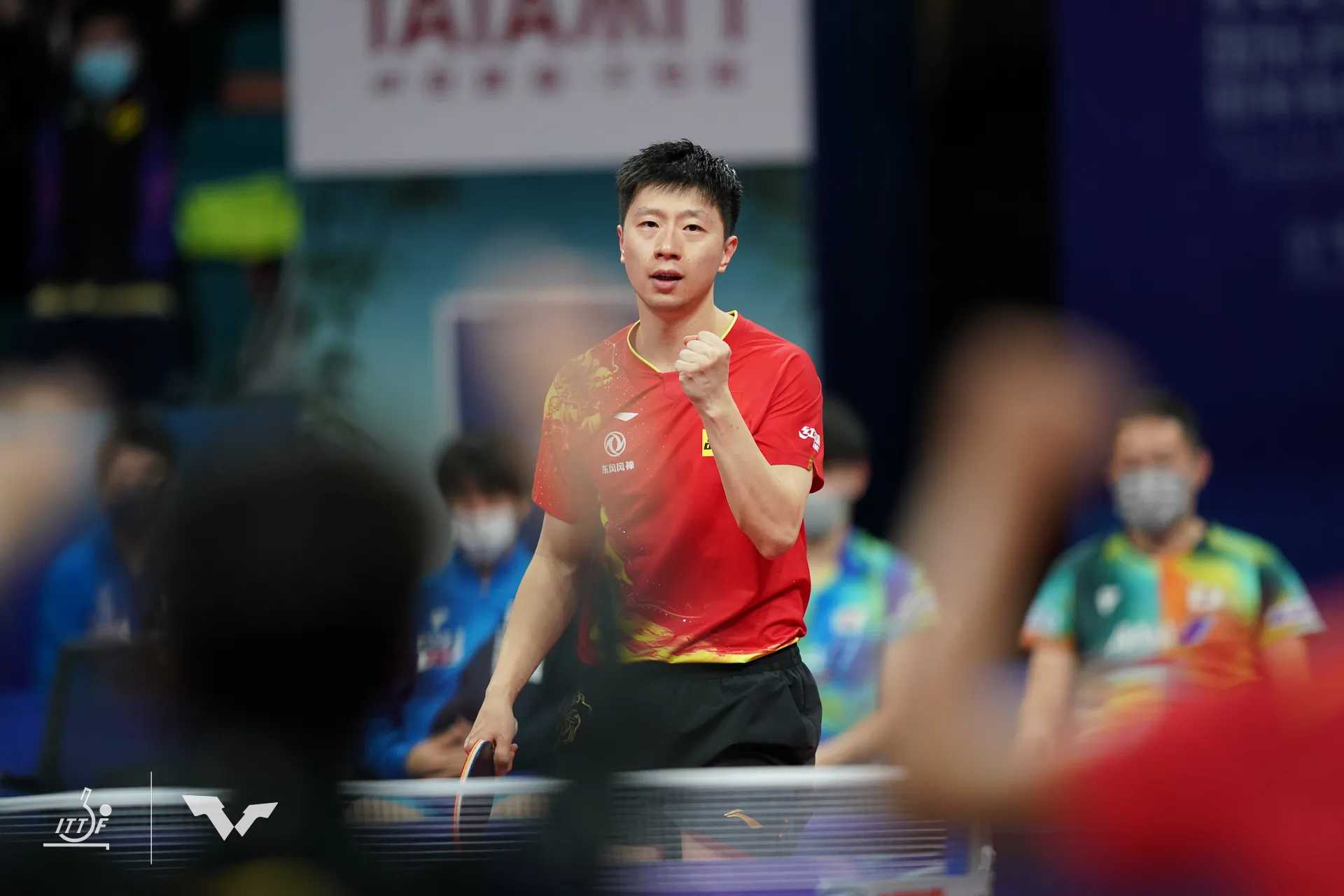
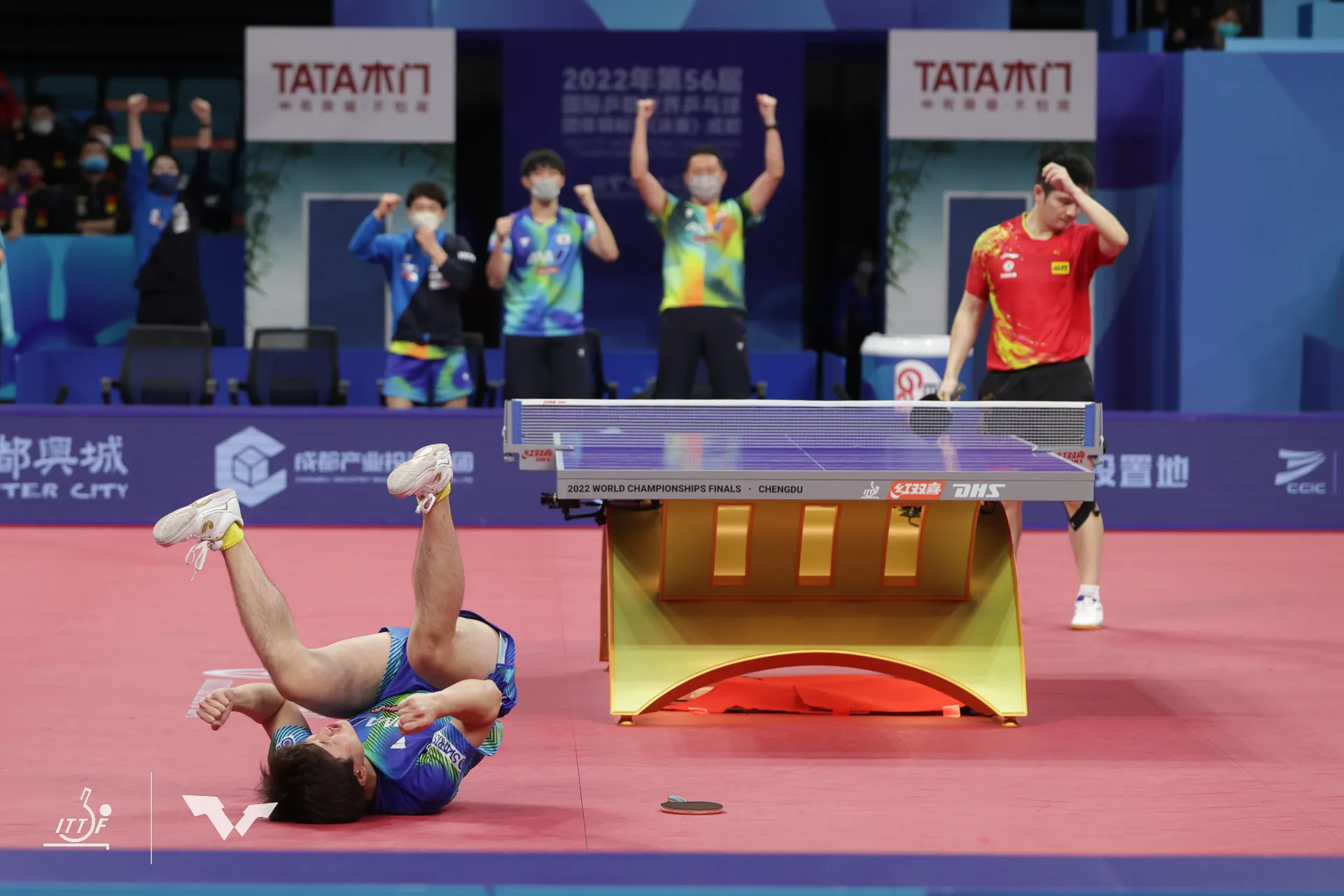
Everything would come down to the fifth match. Wang Chuqin vs Togami Shunsuke.
2.2.2 Wang vs Togami: The Decider
Even before he stepped onto the court, Wang was clearly carrying the weight of the moment. Watching Fan’s loss from the warm-up area left Wang struggling to settle into his own preparation.
For the first time in 21 years, Japan stood one match away from defeating China at the World Team Championships. Wang and Togami walked onto the court with the team score tied 2-2.
The opening game could hardly have started worse for Wang.
Togami rode the momentum from Harimoto’s victory and came out aggressively. Wang, meanwhile, still looked tense and hesitant. Before long, he was trailing 4-9.
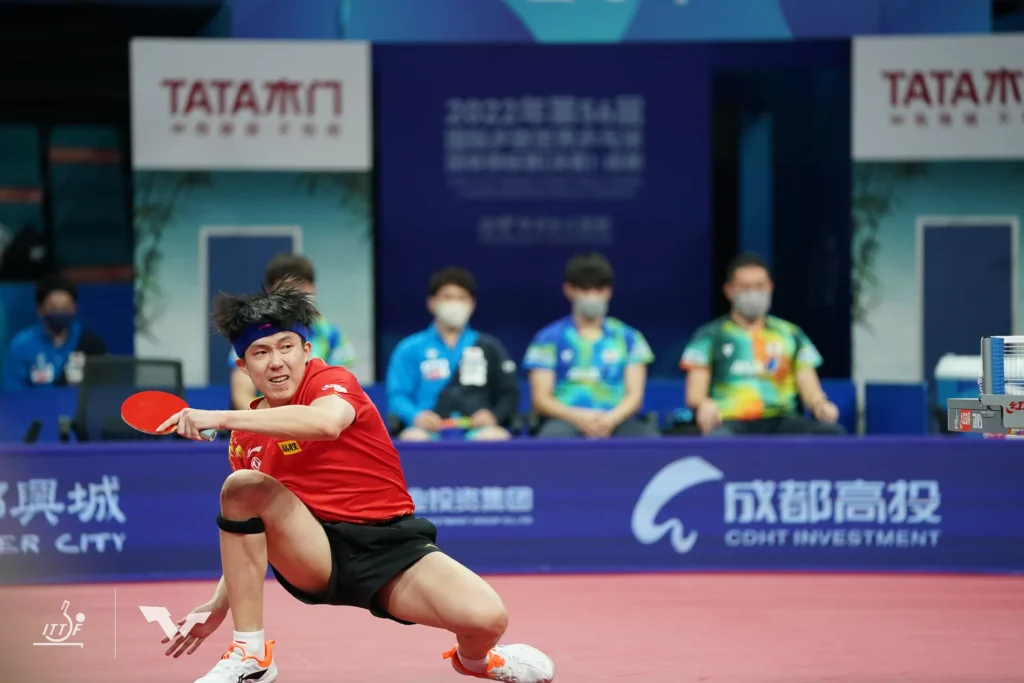
China suddenly found itself only a few points from elimination. A few more points, and the tie could have slipped away.
Yet somehow, Wang stayed alive.
Point by point, he fought his way back. First to 8-9, then even closer. A crucial serve error from Togami gave him an opening, and Wang seized it. What had looked like a lost game suddenly flipped. He stole the opener 12-10.
Afterward, Wang explained the key moment. “The key point was the serve mistake Togami made when I was down 4-9. I felt he was trying to finish me off with his serve. But when I sensed a shift in his mentality, I just focused on fighting for every point and getting closer on the scoreboard, even if I still might lose the game.”
For Togami, the missed opportunity proved costly. After letting a 9-4 lead slip away, his confidence visibly dropped, while Wang took control through his serve variations.11 The second game stayed close early before Wang pulled away to win 11-7.
By the third game, the momentum had fully shifted. Wang played freely on both offense and defense, and even a few fortunate points seemed to fall his way.
“I felt a sense of relief,” Wang later said. “As the match went on, I became more and more relaxed.” He soon earned the third game 11-4, completing a straight-games victory.
China had survived.
With that win, Wang secured a 3-2 team victory over Japan and sent China into another World Team Championships final.
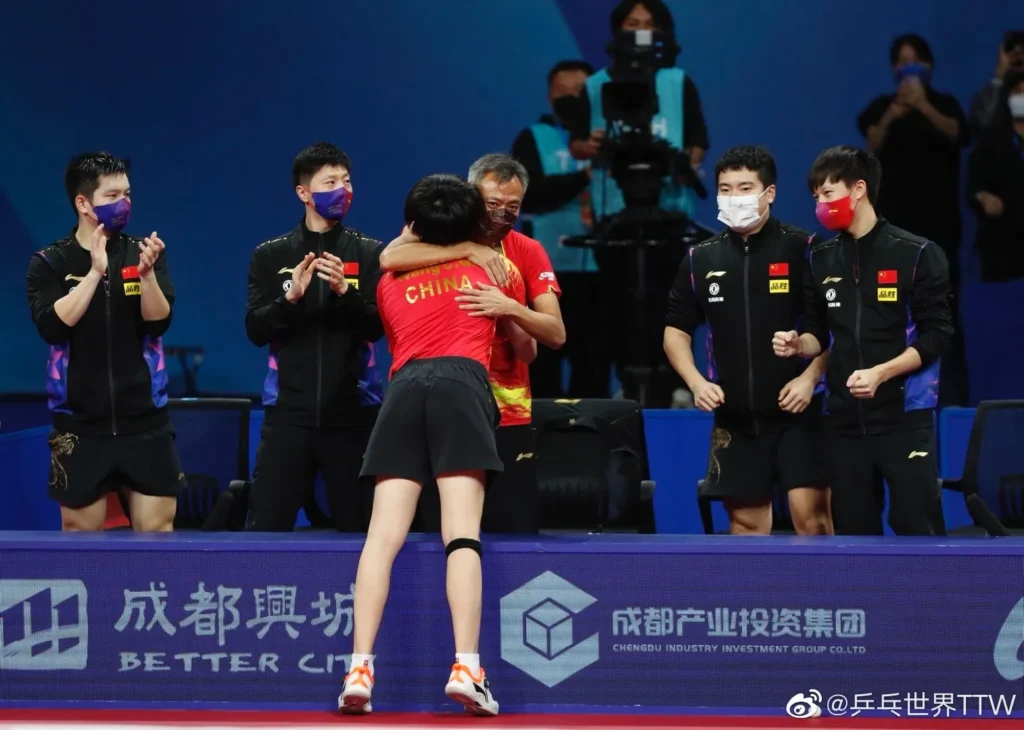
Reflecting on the match, Togami said, “I could see that Wang Chuqin was so nervous that his whole body was stiff. For me, there was nothing to lose. But for him, losing would have meant ending China’s championship streak and disappointing an entire country. I could feel the enormous burden he was under. I fought with everything I had, but I was still no match for him. The victory or defeat was decided in the first game.”
What stood out to me was how both the Chinese and Japanese players spoke about each other with humility and respect. Based on the materials I watched and read, that respect appeared closely tied to their traditional cultures and their shared understanding of what this rivalry means.
For Wang, the night became a form of self-redemption. He won back the points he had lost earlier in the tie. He proved himself and, in a way, saved himself at the defining moment of his young career. Wang would later describe the experience as feeling like a matter of “life and death.”
For Team China, it also became a defining step in preparing the next generation. For Wang, it was the first time he truly stood in the center of that process.
2.3 More than a 10th Straight Title
After the drama of the semifinal, the next day’s final against Germany felt almost routine.
Fan Zhendong opened with a 3-0 victory over Benedikt Duda. Ma Long followed with a 3-1 win over Qiu Dang. Wang Chuqin then defeated Kay Stumper 3-0 to seal the tie.
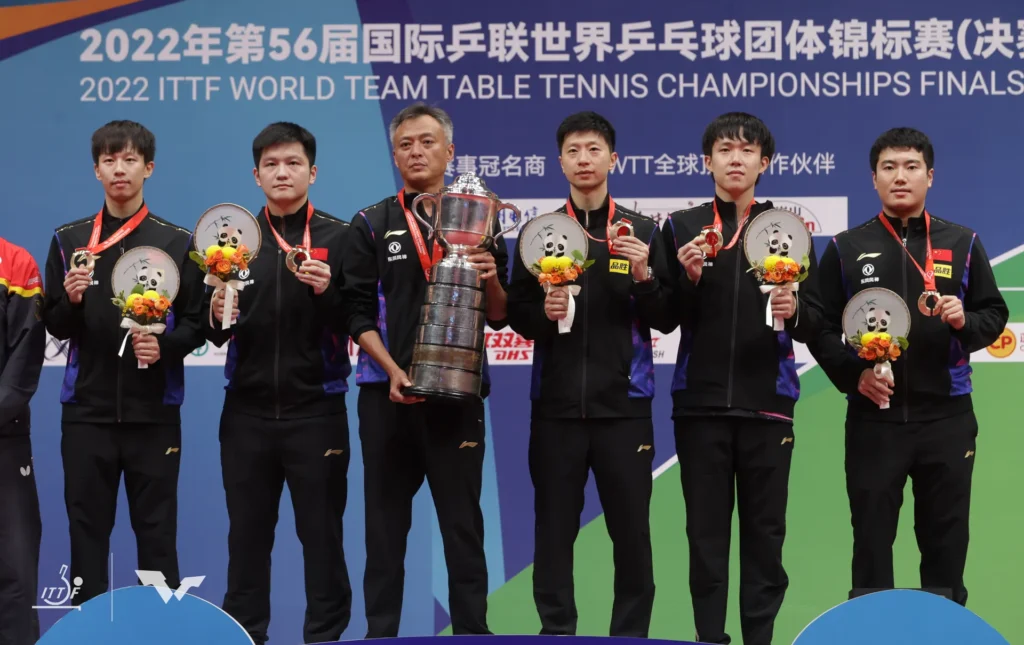
China retained the Swaythling Cup, the sport’s oldest trophy, for a 10th consecutive title at the World Team Championships and its 22nd overall.
One reason I spend so much time on Chengdu is that the tournament revealed something I have noticed repeatedly while watching Team China. There is a deep-rooted sense of patriotism and collective identity, expressed in a distinctly Chinese way that can be difficult to put into words. The players compete for themselves, but also for the team, the tradition, and something larger than any individual match.
That culture creates a shared belief that often translates into confidence on the court. From administrators and coaches to players and support staff, everyone seems remarkably aligned around one goal: winning. At the highest level, mindset can determine the outcome as much as technique.
The other side of that belief is expectation. The same culture that builds confidence also places enormous weight on every result. Players have to learn how to handle mindset swings, outside noise, setbacks, and self-doubt. In many ways, that process matters just as much as technical development.
Perhaps that is why Team China often looks strongest when facing adversity during the team events. The players trust the system, but they also trust each other. If one player loses a point, a teammate can win it back. If one player falls short, someone else will step forward. The responsibility is shared.
That feeling struck me even more strongly when I sat in the arena at the 2026 World Team Championships in London. I’ll share more about that experience soon.
For Wang, Chengdu was his first experience carrying that level of responsibility in a major team competition. As the youngest member and least experienced player on the team, he was nurtured and shaped by the team spirit.
No matter who is playing, the entire team stays invested in every point. Teammates sit courtside throughout the match, celebrating good shots, offering encouragement after mistakes, and constantly discussing tactics. The player at the table may be alone, but he rarely feels alone.
When Wang was on court, Ma Long could often be heard shouting encouragement from the courtside, “Don’t worry. Just play however you want.”
All that support mattered.
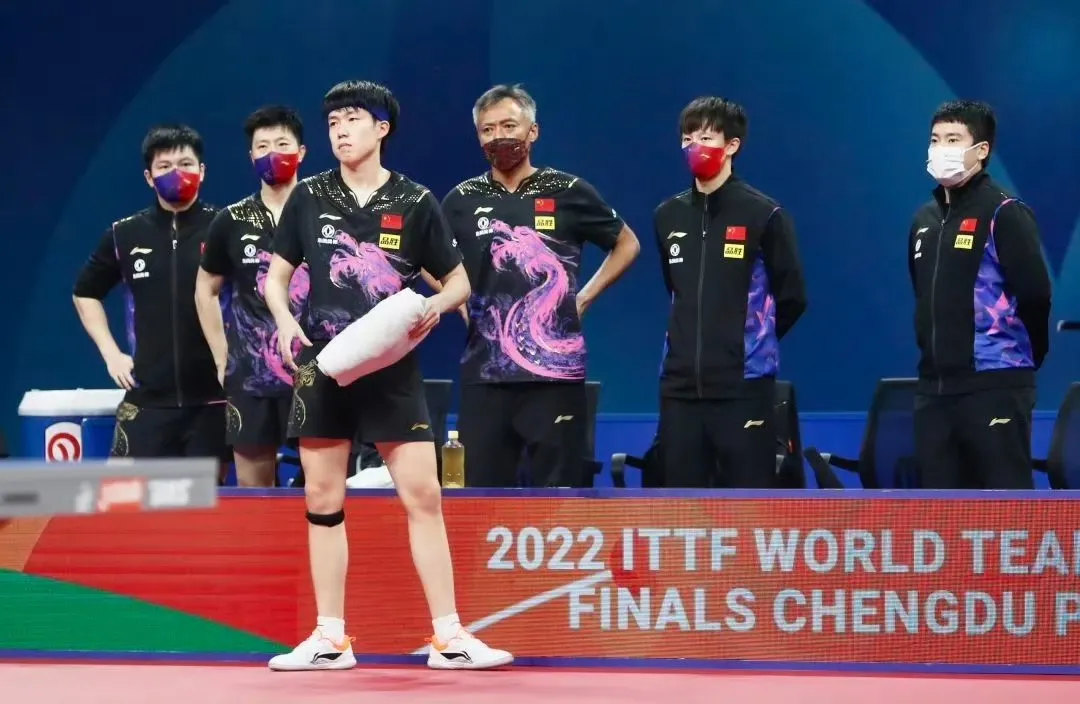
Before the deciding match against Togami, teammates and coaches gathered around Wang in the training hall to help him reset mentally and rebuild his confidence after the loss to Harimoto. Wang later said he deeply appreciated those conversations.
That’s why I would say Chengdu left a lasting mark on him.
Over the following years, Wang often seemed different in team competition. His resilience, intensity, and willingness to fight for every point frequently appeared even stronger than in singles events.
Whether that came from experience, maturity, personality, or the influence of team culture, I cannot say for certain. But I have always found it fascinating.
3. After Chengdu: From Prospect to Core Player
After Chengdu, the generational transition of China’s men’s team came into clearer focus.
For years, the CNT had been searching for the next group of players capable of carrying the team beyond the Ma Long era. After the Tokyo Olympics, that challenge grew even more urgent as other countries began introducing a new wave of young talent.
The hope was that tournaments like the 2022 World Team Championships would help the younger generation establish itself during the Paris Olympic cycle.
The men’s team head coach at the time, Qin Zhijian, spoke openly about that transition after Chengdu. “Ma Long remained the spiritual leader and stabilizing anchor. Fan Zhendong was in his prime and expected to take the leading role. Wang Chuqin, representing the younger generation, stood out with his unique playing style and temperament.”12
Looking back from 2026, we know what happened next. Wang gradually took on an increasingly large role during those years. He went on to play a major part throughout the Paris and currently LA Olympic cycles, win world titles, compete in multiple World Championships and Team Championships, and eventually take over as captain of the Chinese men’s team.13
It’s fair to say he went further than many people expected at the time. But none of that was guaranteed in October 2022.
Back then, Wang was still a 22-year-old player trying to establish himself in one of the sport’s biggest stages. And don’t forget, he was also a left-hander navigating a system in which left-handed male players have historically faced certain structural biases.14
Chengdu didn’t make him a champion overnight. What it did was prove that he could shoulder responsibility when Team China needed him most. In the process, it cemented his place as the team’s third core player behind Ma Long and Fan Zhendong.
After the World Team Championships, Wang’s form remained strong through the rest of the year, and the expectations around him only grew.
See you in the next post.
Read Also
Why Chengdu 2022 Mattered: Team China at a Turning Point
Wang Chuqin 2022 Matches – YouTube
Wang Chuqin vs. Systemic Bias Against Left-Handers in Chinese Table Tennis
Reference
- Wang Chuqin and Wang Manyu Prevail At WTT Macao ↩︎
- Wang Chuqin 2022-01-23 – Douyin ↩︎
- 王楚钦:被期待是好事,我有勇气去尝试 – 乒乓世界 ↩︎
- Wang Chuqin vs Lin Yun-Ju | MS | WTT Star Contender European Summer Series 2022 (QF) ↩︎
- Wang C./Wang M. vs Tomokazu H./Hina H. | XD | WTT Star Contender ESS 2022 (Finals) ↩︎
- The Weight Behind the Glory: Wang’s Mixed Doubles Life | Wang Chuqin Gamebook ↩︎
- Wang Chuqin vs Kristian Karlsson | MS | WTT Champions European Summer Series 2022 (R32) ↩︎
- How Sweden Won the 2000 World Team Table Tennis Championships! – YouTube ↩︎
- Highlights | Wang Chuqin (CHN) vs Tomokazu Harimoto (JPN) | MT SF | #ITTFWorlds2022 ↩︎
- 王楚钦:10月最深的记忆,是那个第五盘 – 乒乓世界 ↩︎
- 2022年乒乓球成都团体世锦赛:中国男队险胜日本跻身决赛 | Olympics ↩︎
- Qin Zhijian’s Interview – WTT ↩︎
- Wang Chuqin appointed China men’s table tennis captain – People’s Daily Online ↩︎
- Wang Chuqin vs. Systemic Bias Against Left-Handers in Chinese Table Tennis ↩︎
Leave a Reply